 September 25, 2026
Bones may look strong and solid, but they are living tissues that constantly change throughout life. As we grow older, bones can gradually lose strength. In some people, this bone loss becomes significant enough to cause osteoporosis, a condition in which bones become weak and more likely to break.
Osteoporosis often develops without obvious symptoms. Many people do not know they have it until they suffer a fracture after a minor fall or injury.
Understanding your risk factors and taking steps to protect your bone health can help reduce the chances of fractures and maintain mobility as you age.
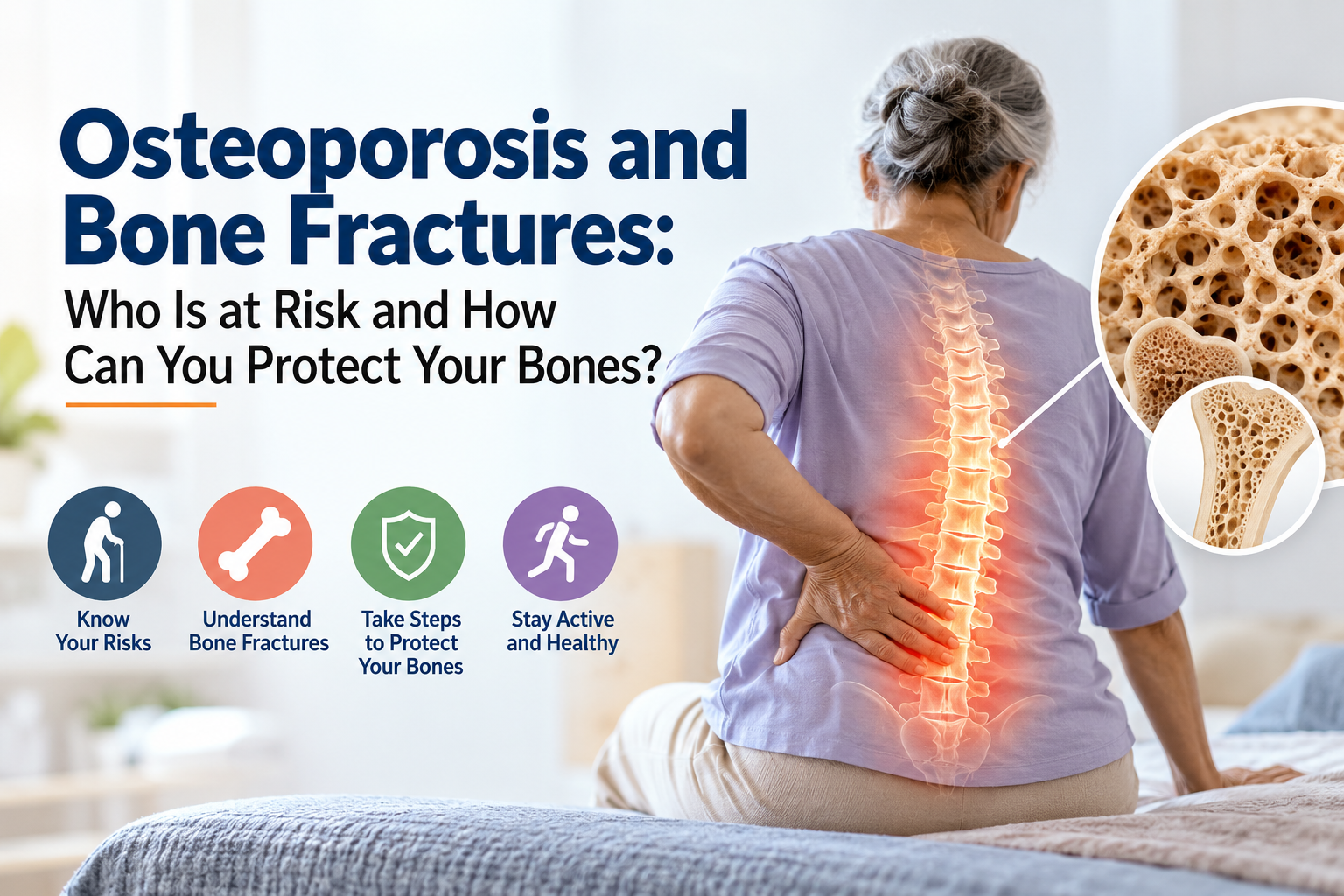
Osteoporosis is a condition in which bones become less dense and weaker over time.
Healthy bones have a strong internal structure. In osteoporosis, this structure becomes thinner and more fragile, making bones easier to break.
The condition commonly affects areas such as:
Osteoporosis and other age-related bone problems are managed as part of orthopaedic care. You can learn more about SSB Healthcare’s Orthopaedics & Joint Replacement Department, which treats a wide range of bone, joint, arthritis, and fracture-related conditions. SSB-Hospital
Osteoporosis may develop for years without causing noticeable symptoms.
Unlike some medical conditions, you may not experience pain during the early stages of bone loss.
For some patients, the first sign is a fracture.
A person may break a bone after:
That is why identifying risk factors before a fracture occurs is important.
Anyone can develop osteoporosis, but some people have a higher risk than others.
Bone density naturally reduces as we age. Older adults are therefore more likely to develop weak bones and fractures.
SSB Healthcare's orthopaedic department also identifies increasing age as one of the factors associated with conditions such as osteoporosis and other musculoskeletal problems. SSB-Hospital
Women have a higher risk of osteoporosis, particularly after menopause.
The reduction in estrogen levels after menopause can lead to faster bone loss.
Women with early menopause may need to discuss their bone health with a doctor, especially if they have additional risk factors.
If a parent or close relative has osteoporosis or has suffered a hip fracture, your own risk may be higher.
Family history does not mean that you will definitely develop osteoporosis, but it is an important factor to discuss with your doctor.
Calcium is necessary for maintaining strong bones, while vitamin D helps the body absorb calcium.
A diet that consistently lacks these nutrients may contribute to poor bone health.
Bones respond to physical activity.
A lack of regular exercise can contribute to weaker muscles and bones. It can also affect balance, increasing the risk of falls.
Smoking may negatively affect bone health and can interfere with the body's ability to maintain healthy bone tissue.
Some medications can affect bone strength when taken for a long time.
For example, prolonged use of certain corticosteroid medicines may increase the risk of osteoporosis.
Patients taking long-term medications should not stop them on their own. Instead, they should discuss bone health and possible preventive measures with their doctor.
Some health conditions can increase the risk of bone loss.
These may include hormonal disorders, rheumatoid arthritis, digestive conditions that affect nutrient absorption, and certain chronic diseases.
Osteoporosis itself may not cause symptoms in its early stages.
As bone loss progresses, some people may experience:
Back pain can sometimes occur when weakened bones in the spine develop compression fractures.
If you notice unexplained loss of height, persistent back pain, or repeated fractures, it is worth seeking medical advice.
When bones become fragile, even a relatively minor fall can lead to a serious fracture.
Common osteoporosis-related fractures include:
Hip fractures can significantly affect mobility, particularly in older adults. They may require surgery followed by rehabilitation.
People often put their hands forward when falling, which can result in wrist fractures when the bones are weak.
Compression fractures of the spine may cause pain, loss of height, or a hunched posture.
SSB Healthcare's orthopaedic services include fracture and trauma management, along with care for osteoporosis and other bone conditions. SSB-Hospital
Doctors may assess your bone health based on your age, symptoms, medical history, previous fractures, and other risk factors.
A bone density test may be recommended to check the strength of your bones and help identify osteoporosis or increased fracture risk.
SSB Healthcare's orthopaedic services list bone density assessment among the investigations used to evaluate bone health and osteoporosis risk. SSB-Hospital
Your doctor may also recommend blood tests to check factors such as calcium, vitamin D, and other possible causes of bone loss.
Bone health should ideally be looked after throughout life.
A few healthy habits can help support stronger bones and lower the risk of falls and fractures.
Calcium is an important building block for bones.
Calcium-rich foods may include:
Your doctor or dietitian can help you understand how much calcium you need based on your age and health.
Vitamin D helps your body absorb calcium.
Some vitamin D is produced when the skin is exposed to sunlight. It can also come from certain foods or supplements when medically recommended.
Do not start high-dose vitamin D or calcium supplements without professional advice, particularly if you have kidney or other medical conditions.
Regular physical activity supports bone strength, muscle strength, balance, and coordination.
Useful exercises may include:
The right type of exercise depends on your health and fracture risk.
If you already have osteoporosis or have suffered a fracture, speak with a doctor or physiotherapist before starting a new exercise programme.
SSB Healthcare's Physiotherapy Department provides rehabilitation, strengthening, balance, and mobility programmes, including support for elderly patients and people with musculoskeletal conditions. SSB-Hospital
Preventing falls is especially important for people with weak bones.
Simple steps can help:
Improving balance and muscle strength can also reduce fall risk.
Being significantly underweight can increase the risk of low bone density.
At the same time, maintaining overall fitness and muscle strength can support your bones and joints.
A balanced diet combined with appropriate physical activity is generally better for bone health than relying on supplements alone.
Smoking can negatively affect bone strength.
Excessive alcohol intake can also contribute to poor bone health and increase the risk of falls.
Reducing these risk factors can support both bone health and overall wellbeing.
You should discuss bone health with your doctor if you:
Your doctor can decide whether you need a bone density test or other investigations.
SSB Healthcare also offers Preventive Health Checkup services that include investigations such as serum calcium and vitamin D testing in relevant packages. SSB-Hospital
If you suffer a fracture, particularly after a minor fall, the focus should not only be on treating the broken bone.
It is also important to understand why the fracture happened.
Your doctor may assess whether osteoporosis or another bone condition contributed to the injury.
Treatment may include:
Treating the underlying cause can help reduce the risk of another fracture in the future.
At SSB Heart & Multispeciality Hospital, Faridabad, the Orthopaedics & Joint Replacement team provides evaluation and treatment for osteoporosis, fractures, arthritis, and other bone and joint conditions. The department also provides fracture and trauma management and joint-related care. SSB-Hospital
Patients who need rehabilitation can also be supported through the hospital's physiotherapy services to improve strength, mobility, balance, and functional independence. SSB-Hospital
If you are concerned about weak bones, repeated fractures, persistent bone pain, or your risk of osteoporosis, an orthopaedic assessment can help determine the next steps.
Osteoporosis can develop quietly, but its effects can become serious when a fracture occurs.
Older age, menopause, family history, poor nutrition, lack of physical activity, smoking, certain medicines, and some medical conditions may increase your risk.
The good news is that many steps can help protect your bones.
Eating a balanced diet, maintaining healthy vitamin D and calcium levels, exercising regularly, preventing falls, and getting timely medical assessment can all contribute to better bone health.
If you have risk factors for osteoporosis or have suffered a fracture after a minor injury, do not ignore it.
Consult the Orthopaedics & Joint Replacement team at SSB Hospital, Faridabad, for bone health assessment, fracture care, and personalised treatment advice.
2026 © SSB Heart and Multispecialty Hospital.
 International
  Find a
  Lab
Lab  Health
  Careers