 November 17, 2026
Benign prostatic hyperplasia (BPH) means non-cancerous enlargement of the prostate. It becomes more common with age and can narrow the urine channel, causing lower urinary tract symptoms. TURP surgery for enlarged prostate is one established treatment when symptoms or complications warrant an operation.
Common symptoms include a weak stream, straining, starting and stopping, feeling that the bladder has not emptied, frequent urination, urgency and waking at night to urinate. These symptoms can also arise from infection, bladder problems, medicines, neurological conditions or prostate cancer; evaluation is important. Sudden inability to pass urine, fever with urinary symptoms, severe lower-abdominal pain or heavy blood in urine requires urgent medical assessment.
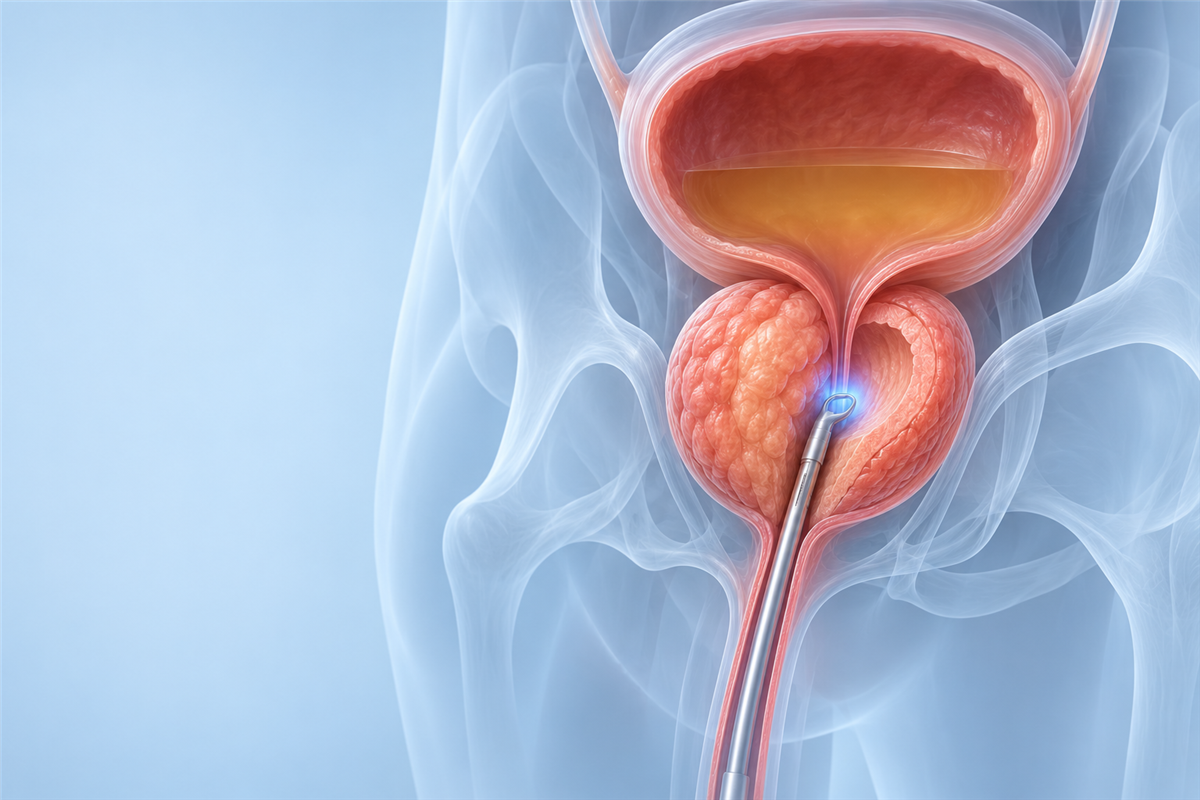
Transurethral resection of the prostate (TURP) is performed through the urethra, so it does not usually require an external skin incision. Under anaesthesia, a surgeon passes a resectoscope through the penis to remove obstructing prostate tissue in small pieces and improve urine flow. The removed tissue may be examined in the laboratory. TURP treats obstruction from BPH; it is not the usual operation for prostate cancer.
Medicines and lifestyle measures help many people. Surgery may be discussed when symptoms remain troublesome despite treatment or when there are complications such as repeated urinary retention, recurrent infections, bladder stones, recurrent visible bleeding believed to be from the prostate, or kidney/upper urinary tract effects. The decision follows history, examination, urine tests, blood tests and appropriate assessment of the prostate and bladder.
A urinary catheter is usually used temporarily after surgery to allow bladder drainage and irrigation. Mild burning, urgency, frequency and blood-tinged urine can happen in recovery. Follow the hospital’s instructions for fluids, activity, constipation prevention and medicines. Avoid strenuous activity, heavy lifting and sexual activity until your surgeon says it is safe. Timing varies by patient and procedure.
Call the treating team urgently for inability to pass urine after catheter removal, worsening bleeding or clots, fever/chills, severe pain, persistent vomiting or feeling acutely unwell. Attend all follow-up appointments.
TURP can improve urine flow and reduce obstruction symptoms, but benefit is individual. Risks include bleeding, infection, temporary urinary symptoms, urethral narrowing, incontinence, erectile/ejaculatory changes, need for re-treatment and anaesthesia-related risks. Retrograde ejaculation—semen flowing into the bladder rather than out through the penis—is a common potential sexual side effect. Ask what is most relevant in your case.
SSB Healthcare lists bipolar TURP among its urology services. The exact equipment and treatment pathway should be confirmed at consultation.
No. Observation, medicines and several procedures may be options. The right treatment depends on prostate size, symptoms, health and goals.
Sexual effects vary. Discuss erection and ejaculation outcomes, fertility goals and alternatives with the urologist before consenting.
Recovery is individual. Follow the operating team’s specific return-to-work and activity advice.
No. TURP treats urinary obstruction due to prostate enlargement; cancer evaluation follows a separate clinical pathway.
2026 © SSB Central Hospital and Research Centre Ltd.
 International
 Find a
 Lab
 Health
 Careers