 August 13, 2026
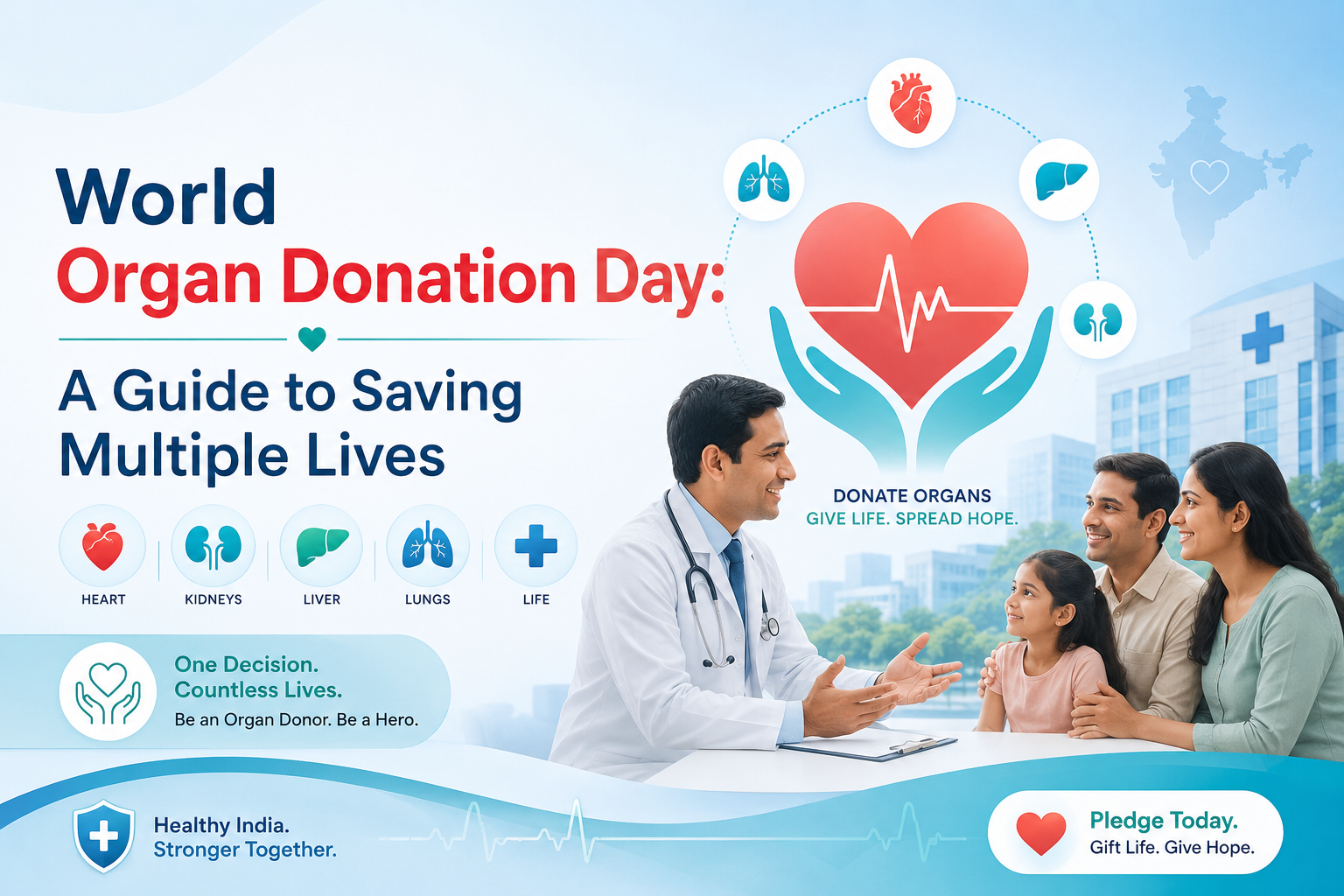
For people living with end-stage organ failure, transplantation may offer a second chance at life when clinically appropriate. World Organ Donation Day, observed on 13 August, is an opportunity to understand organ donation, correct misconceptions and discuss donation wishes with family members. In India, organ donation and transplantation follow defined medical, ethical and legal safeguards.
World Organ Donation Day promotes awareness about organ and tissue donation and encourages people to make informed decisions about becoming donors. India also observes Indian Organ Donation Day separately; its 16th edition was organised by the National Organ and Tissue Transplant Organization (NOTTO) on 3 August 2026.
Awareness is important because organ donation involves more than signing a pledge. People should also understand living and deceased donation, consent, brain-stem death, medical suitability and the organ-allocation process.
Organ donation is the voluntary donation of a suitable organ or tissue from a living or deceased person for transplantation into someone who needs it. Donation proceeds only after medical assessment and in accordance with applicable medical and legal requirements.
A medically suitable adult may voluntarily donate certain organs or parts of organs. In India, a living donor must generally be 18 years or older. Common examples include donating one kidney or a part of the liver. Medical and legal evaluation is required before a living donation can proceed.
After death, organs and tissues may be considered for donation if they are medically suitable. In cases of brain-stem death, medical support may temporarily maintain circulation and organ function while death certification, consent and required legal procedures are completed.
Depending on the type of donation and medical suitability, transplantable organs may include:
Tissues that may be donated include:
The final decision about whether an organ or tissue can be used is made by qualified medical professionals. Age alone does not automatically determine suitability for deceased donation.
Different suitable organs from one deceased donor may be transplanted into different recipients. The Ministry of Health & Family Welfare has stated that one deceased donor can potentially give new life to up to eight people by donating vital organs. Tissue donation may benefit additional patients.
The actual number varies because donation depends on the condition of each organ, consent, medical suitability, timing, allocation and availability of compatible recipients.
India's transplantation programme has expanded considerably, but there is still a substantial gap between the number of people who need organs and the number available for transplantation.
According to data released by the Ministry of Health & Family Welfare in August 2026:
These numbers demonstrate growing public participation, while the continuing gap between organ demand and availability makes deceased organ donation awareness particularly important.
Many people can potentially become organ or tissue donors, but eligibility is determined medically.
For living donation, the donor must be an adult and undergo appropriate medical and legal assessment. For deceased donation, doctors assess each organ and tissue individually based on health, function and suitability.
Older age or an existing medical condition therefore does not automatically mean that donation is impossible. The final decision is made by healthcare professionals after evaluation.
The organ donation process in India generally includes the following steps:
A donor pledge records an individual's wishes, but family involvement remains important for deceased donation.
Brain-stem death is the irreversible loss of brain-stem function and is legally recognised as death in India under the Transplantation of Human Organs and Tissues Act (THOTA).
A person who has suffered brain-stem death cannot breathe independently, although ventilatory and intensive medical support may temporarily maintain heartbeat and circulation.
Brain-stem death is not the same as coma. A person in a coma is alive, whereas brain-stem death represents irreversible loss of brain-stem function and requires formal medical certification.
In August 2026, the Government of India released National Brain Stem Death Certification Guidelines to help standardise brain-stem death certification across the country.
Fact: Lifesaving treatment comes first. Deceased organ donation is considered only after death has been established and the necessary medical, legal and consent requirements have been addressed.
Fact: Age alone does not determine deceased-donor suitability. Doctors assess the condition of individual organs and tissues.
Fact: Not necessarily. Medical professionals evaluate each potential donor and determine whether any organs or tissues are suitable.
Fact: Government organ-donation guidance states that retrieval is performed respectfully by skilled surgical teams and does not disfigure the donor's body.
Fact: Organ allocation uses established criteria such as medical urgency, compatibility and waiting-list priority rather than simply an individual's financial position.
People wishing to become organ donors can record their intent through the official NOTTO digital donor-pledge system. The Government of India maintains a dedicated online portal for citizens to register pledges for organ and tissue donation after death.
Registering is only one part of the process. Tell your family about your decision. Family involvement and consent are important if deceased donation is later considered.
For reliable information, use NOTTO or your relevant State Organ and Tissue Transplant Organisation rather than unofficial donor-registration websites.
Discussing organ donation in advance helps family members understand your wishes and the reasons behind them.
Keep the conversation informed and pressure-free. Organ donation should remain a voluntary, respectful decision based on accurate information rather than fear, guilt or misinformation.
An organ transplant may be considered for selected patients with severe or end-stage organ failure when specialists determine that transplantation is clinically appropriate. This may include advanced kidney, liver, heart or lung disease.
Patients with kidney-related concerns can explore SSB Healthcare's Nephrology & Dialysis and Urology & Kidney Transplant services. SSB Healthcare's website specifically lists kidney-transplant services within its Urology & Kidney Transplant department.
For other organ-related conditions, relevant specialty care is available through Gastroenterology & Hepatology, Cardiology and Pulmonology, Allergy & Sleep Medicine.
This World Organ Donation Day, you can contribute responsibly by learning from credible health authorities, sharing verified information, correcting myths sensitively, discussing donation with your family and considering an official organ donor pledge after understanding what it involves.
Awareness becomes meaningful when it helps people make informed decisions.
World Organ Donation Day reminds us that an informed decision can create hope for more than one family. Organ donation depends on medical suitability, consent, legal safeguards and appropriate allocation, but one suitable deceased donor may potentially help several recipients.
A decision informed by awareness can give hope to more than one family.
SSB Healthcare supports patient education, specialist consultation and responsible healthcare awareness so that patients and families can make better-informed decisions about their health.
If you or a family member is living with a serious kidney, liver, heart, lung or other organ-related condition, consult an appropriate specialist for evaluation, diagnosis and treatment guidance.
Find an SSB Healthcare specialist or contact SSB Healthcare to book an appointment.
World Organ Donation Day is observed on 13 August to raise awareness about organ and tissue donation and encourage informed conversations about becoming a donor.
Adults may be considered for living donation following medical and legal evaluation. For deceased donation, people of different ages may potentially donate if their organs or tissues are medically suitable.
Depending on medical suitability, the kidneys, liver, heart, lungs, pancreas and intestines may be donated. Tissues can include corneas, skin, heart valves, bones and blood vessels.
Yes. A medically suitable adult can potentially donate certain organs or parts of organs, commonly one kidney or part of the liver, after medical and legal evaluation.
Living donors must generally be at least 18 years old. For deceased donation, medical suitability rather than age alone determines whether individual organs or tissues can be used.
You can record your organ and tissue donation pledge through the official NOTTO digital donor-pledge system. You should also discuss your wishes clearly with your family.
Yes. Different medically suitable organs from one deceased donor may be transplanted into different recipients. The Government of India states that one deceased donor can potentially give new life to up to eight people through vital organ donation.
Medical Disclaimer: This article is intended for general health awareness and educational purposes only. Organ donation and transplantation eligibility depend on medical evaluation and applicable legal and regulatory requirements. Consult qualified healthcare professionals and official organ donation authorities for personalised guidance.
2026 © SSB Heart and Multispecialty Hospital.
 International
  Find a
  Lab
Lab  Health
  Careers