 September 29, 2026
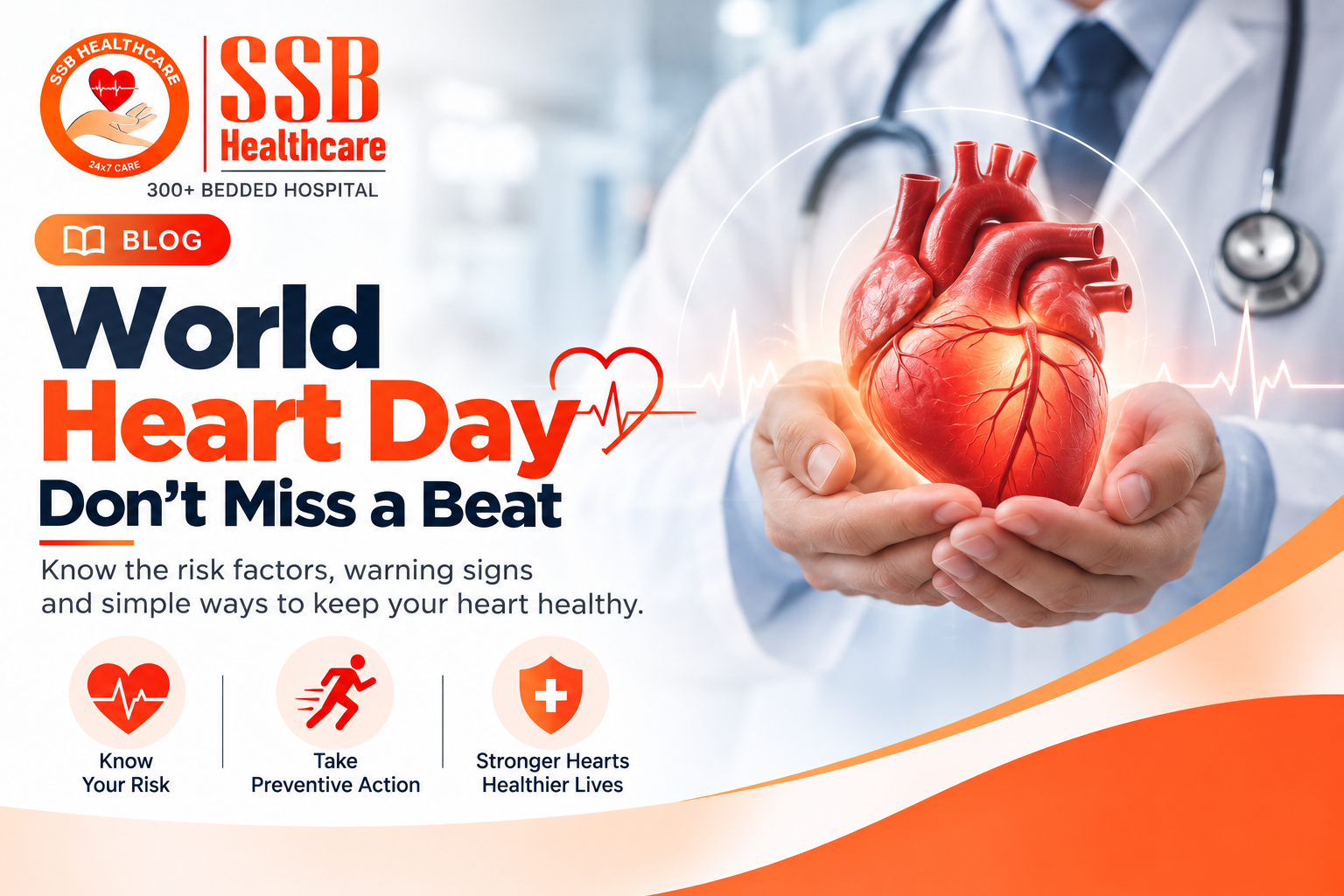
Every year on 29 September, World Heart Day reminds people across the globe to pay closer attention to cardiovascular health. The World Heart Federation’s 2026 campaign continues the theme “Don’t Miss a Beat”, focusing on an important reality: heart disease may develop quietly, and warning signs are sometimes overlooked until a serious cardiovascular event occurs. World Heart Federation
For SSB Heart & Multispeciality Hospital, World Heart Day is an opportunity to encourage people in Faridabad and the surrounding Delhi-NCR region to understand their risks, recognise possible warning signs and make heart health part of routine healthcare—not something to think about only when symptoms become severe.
Cardiovascular diseases, or CVDs, include a broad group of conditions affecting the heart and blood vessels, including coronary heart disease, stroke, heart failure and other cardiovascular disorders.
According to the World Health Organization, an estimated 19.8 million people died from cardiovascular diseases in 2022, representing around 32% of all global deaths. Approximately 85% of those cardiovascular deaths were due to heart attack and stroke. World Health Organization
These numbers make one message particularly important: protecting your heart should begin before an emergency occurs.
The World Heart Federation highlights that heart disease may sometimes remain unnoticed. High blood pressure, for example, may produce few or no obvious symptoms, while some warning signs of cardiovascular disease may also be misunderstood or ignored. World Heart Federation
This is why regular health checks, awareness of risk factors and timely medical consultation matter.
The “Don’t Miss a Beat” campaign encourages people to recognise cardiovascular warning signs while also taking practical steps to protect their hearts.
The World Heart Federation describes three major areas of focus for the 2026 campaign: recognising symptoms, protecting heart health through preventive action, and improving wider cardiovascular awareness and systems of care. World Heart Federation
For individuals and families, the message can be simplified:
Know your risk. Know the warning signs. Take preventive action. Seek medical help when something does not feel right.
A person may look healthy and still have risk factors such as high blood pressure, high blood sugar or abnormal cholesterol levels. Regular screening can help identify these concerns before complications develop.
Several cardiovascular risk factors can be prevented, modified or better managed.
WHO identifies important behavioural and environmental risk factors including tobacco use, unhealthy diet, physical inactivity, harmful alcohol use and air pollution. These factors may contribute to conditions such as raised blood pressure, raised blood glucose, abnormal blood lipids, overweight and obesity, which can increase cardiovascular risk. World Health Organization
Some common factors to discuss with your doctor include:
Having one or more risk factors does not necessarily mean someone will develop heart disease. It does, however, make preventive care and appropriate medical evaluation more important.
Heart problems do not always present in exactly the same way for everyone. Some symptoms can be sudden and intense, while others may appear gradually.
Possible warning signs that deserve medical attention include chest pressure or discomfort, unexplained shortness of breath, unusual sweating, dizziness, fainting, palpitations, unexplained fatigue or discomfort that spreads toward the arm, shoulder, back, neck or jaw.
Symptoms may sometimes be less typical, particularly in certain individuals. That is one reason the World Heart Federation’s campaign emphasises recognising signs that can otherwise be missed. World Heart Federation
Sudden or severe symptoms—especially chest discomfort, significant breathlessness, fainting or symptoms suggestive of a heart attack—should be treated as a medical emergency rather than waiting for them to improve on their own.
Heart health does not always require dramatic lifestyle changes overnight. Consistent habits are often more practical and sustainable.
The World Heart Federation encourages people to incorporate movement into everyday life, such as walking more, taking activity breaks during working hours, using stairs when suitable or choosing other manageable ways to stay active. World Heart Federation
You can begin by focusing on a few areas.
Regular movement supports cardiovascular fitness, weight management and blood pressure control. Choose an activity that is realistic for your age, health status and fitness level.
People with known heart disease or significant medical conditions should discuss a suitable exercise plan with their doctor.
Build meals around vegetables, fruits, whole grains, pulses, lean protein and other nutritious foods while moderating foods that contain excessive salt, sugar, saturated fat or trans fat.
A heart-healthy diet does not have to be complicated. Consistency matters more than occasional perfection.
Avoiding cigarettes and other forms of tobacco is one of the most important steps you can take for cardiovascular health.
If you currently use tobacco, speak with a healthcare professional about appropriate cessation support rather than assuming you must stop without assistance.
Blood pressure, blood glucose and cholesterol can reveal cardiovascular risks that may not cause noticeable symptoms.
Regular screening becomes particularly important if you have diabetes, obesity, hypertension, a family history of cardiovascular disease or other recognised risk factors.
If a doctor has prescribed medicines for blood pressure, diabetes, cholesterol or heart disease, take them according to medical advice. Do not stop cardiovascular medicines simply because you feel better unless your treating doctor recommends a change.
There is no single heart screening schedule that applies to everyone. Your doctor may recommend evaluation based on your age, symptoms, medical history and cardiovascular risk profile.
A preventive consultation may be especially relevant if you have high blood pressure, diabetes, high cholesterol, obesity, tobacco exposure, a strong family history of heart disease, previous cardiovascular problems or unexplained symptoms during activity.
Depending on the clinical situation, a cardiologist may recommend blood tests, an ECG, echocardiography, exercise testing or other cardiac investigations. Not every patient needs every test; the appropriate evaluation should be determined after medical assessment.
SSB Heart & Multispeciality Hospital provides cardiology services in Faridabad, including emergency cardiac care, interventional cardiology and personalised heart-care services. Its Cardiology Department lists specialists including Dr. S.S. Bansal, Dr. Siddhant Bansal, Dr. Ajay Beliya and Dr. Lalit Kumar. SSB-Hospital
The hospital also provides cardiovascular and cardiothoracic services as part of its multidisciplinary care infrastructure. SSB’s Faridabad facility is located at Plot No. 69, Mathura Road, near Neelam Flyover, Sector 20A, Faridabad. SSB-Hospital
The goal of cardiac care is not limited to treating emergencies. Preventive assessment, timely diagnosis, appropriate treatment and long-term risk-factor management can all play a role in protecting cardiovascular health.
World Heart Day is more than an awareness date. It is a reminder to look at the habits and health numbers that are easy to postpone.
Ask yourself: When was my blood pressure last checked? Do I know my cholesterol and blood sugar levels? Am I physically active enough? Have I been ignoring recurring chest discomfort, breathlessness or unusual fatigue?
The 2026 World Heart Day message—“Don’t Miss a Beat”—encourages everyone to recognise cardiovascular warning signs and take practical steps toward prevention. World Heart Federation
Your heart works for you every moment of every day. Give it the attention it deserves.
This World Heart Day, make heart health a priority. If you have cardiovascular risk factors, concerning symptoms or questions about your heart health, consult a qualified cardiologist for an appropriate assessment.
Book an appointment with the Cardiology team at SSB Heart & Multispeciality Hospital, Faridabad, and take a proactive step toward better heart health.
2026 © SSB Heart and Multispecialty Hospital.
 International
  Find a
  Lab
Lab  Health
  Careers