 March 24, 2026
LASIK eye surgery has become one of the most popular vision correction procedures worldwide. Millions of people choose LASIK to reduce or eliminate their dependence on glasses and contact lenses. While the procedure is quick and generally safe, many patients still feel nervous because they are unsure about what actually happens during the surgery.
Understanding the LASIK procedure step by step can help reduce anxiety and prepare patients for a smoother experience and recovery.
This article explains what happens during LASIK eye surgery, who may benefit from it, and what to expect before and after the procedure.
LASIK stands for Laser-Assisted In Situ Keratomileusis. It is a minimally invasive eye surgery used to correct common vision problems such as:
The procedure reshapes the cornea so light entering the eye focuses correctly on the retina, improving vision clarity.
LASIK may be suitable for adults who:
An eye specialist performs detailed testing before determining whether LASIK is the right option.
Patients with cataracts, severe glaucoma, or uncontrolled diabetes may require alternative treatments.
Before the procedure, the ophthalmologist conducts a complete eye evaluation.
This may include:
Patients are usually advised to stop wearing contact lenses for a few days before surgery because lenses can temporarily change the shape of the cornea.
Your eye specialist may also explain the benefits, risks, and recovery process before scheduling surgery.
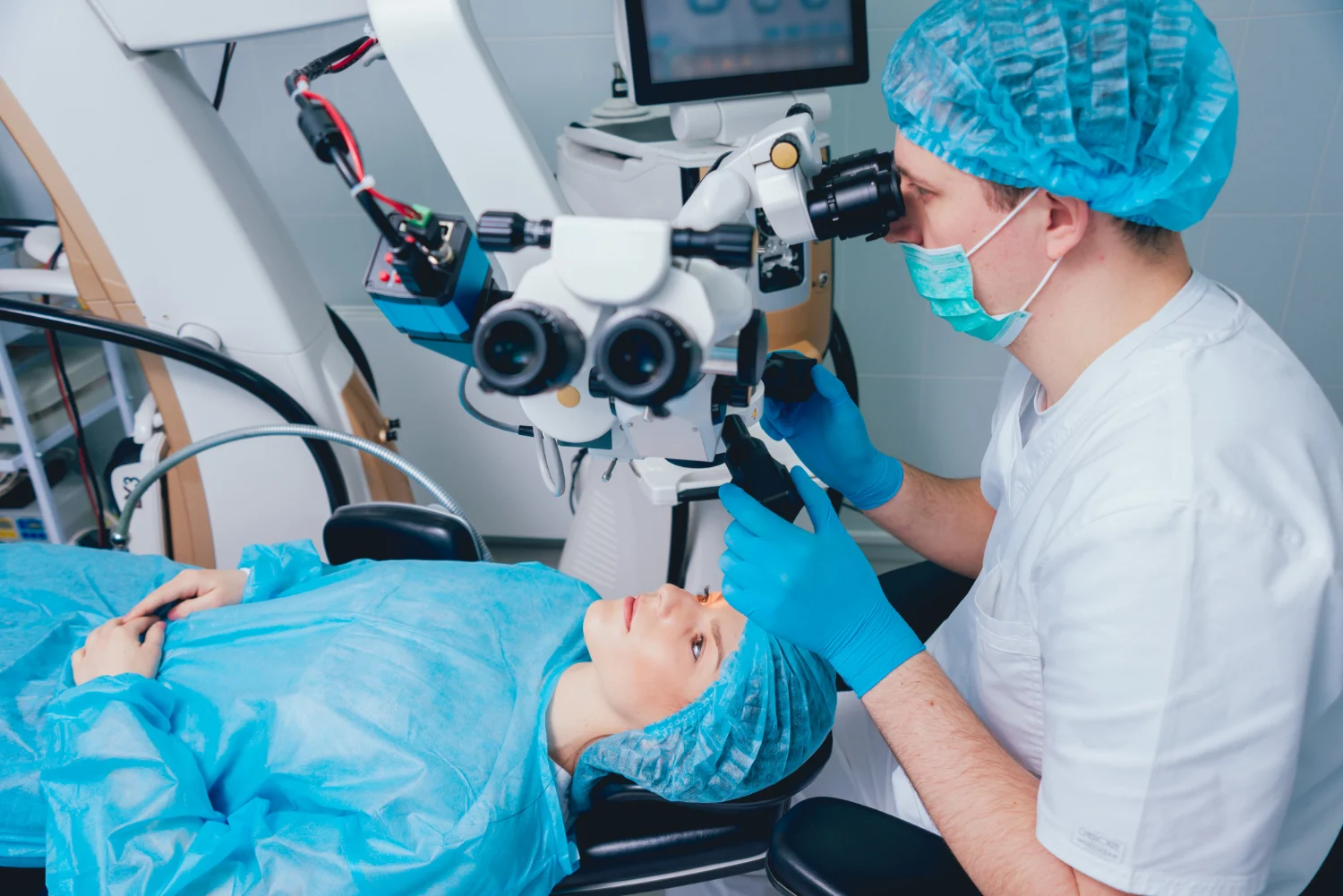
LASIK surgery itself usually takes about 15 to 30 minutes for both eyes.
The procedure begins with numbing eye drops to prevent discomfort. Patients remain awake during surgery, but the eye is kept comfortable throughout the process.
An eyelid holder is gently placed to prevent blinking.
The surgeon creates a thin flap on the outer layer of the cornea using either:
The flap is carefully lifted to expose the inner corneal tissue.
The laser reshapes the cornea to improve how light focuses inside the eye:
f(x)=corneal reshaping for improved light focusf(x)=\text{corneal reshaping for improved light focus}f(x)=corneal reshaping for improved light focus
This reshaping helps correct refractive errors and improves visual clarity.
An advanced excimer laser reshapes the cornea based on the patient’s eye measurements.
During this step:
The laser is highly precise and customized for each eye.
After reshaping the cornea, the surgeon gently places the flap back into position. No stitches are usually required because the flap naturally heals in place.
The eye is then examined to ensure proper alignment.
Most patients experience little to no pain during LASIK surgery.
Some people may notice:
Discomfort generally improves within one or two days.
Recovery after LASIK is usually quick compared to many other surgical procedures.
Patients may notice:
Most people resume normal activities within a few days, although full healing may continue for several weeks.
Doctors usually recommend:
LASIK offers several advantages for suitable candidates:
Many patients experience significantly improved vision within 24 hours.
Like any medical procedure, LASIK has potential risks, although serious complications are uncommon when performed by experienced specialists.
Possible side effects include:
Choosing an experienced eye surgeon and proper screening helps minimize risks.
You may consider LASIK if:
A consultation with an eye specialist helps determine whether LASIK is appropriate for your eyes and lifestyle.
LASIK eye surgery is a safe and effective vision correction procedure for many patients. Understanding what happens during the surgery can reduce anxiety and help patients feel more confident before treatment.
From corneal reshaping to rapid visual recovery, LASIK has helped millions achieve clearer vision with minimal downtime.
If you are considering LASIK surgery, visit SSB Healthcare for expert eye care, advanced laser technology, and personalized treatment guidance.
2026 © SSB Heart and Multispecialty Hospital.
 International
  Find a
  Lab
Lab  Health
  Careers