 October 27, 2026
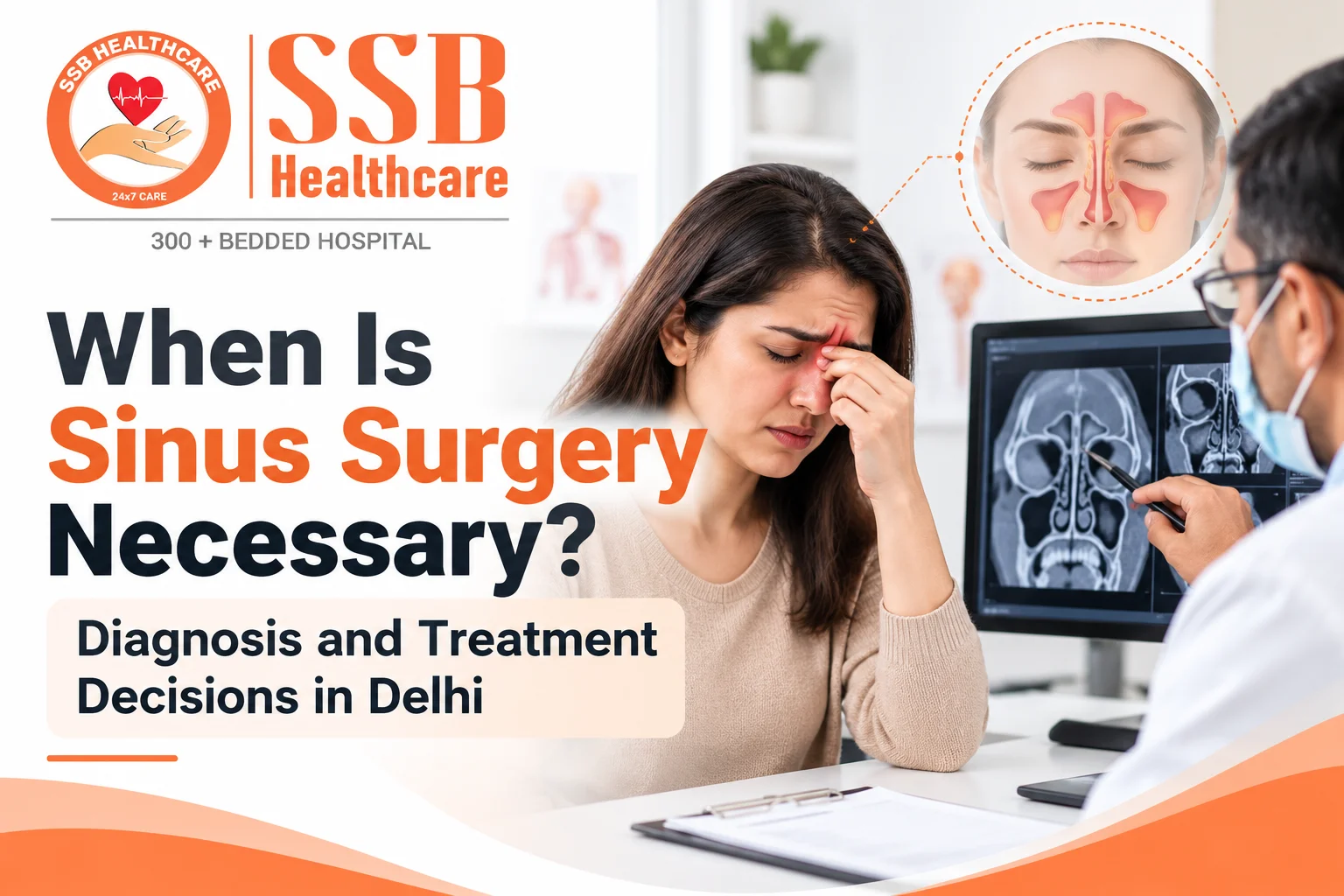
When is sinus surgery necessary? It may be considered when chronic sinus inflammation, nasal polyps or certain other sinus conditions continue to cause significant problems despite appropriate treatment. However, surgery is not required for every sinus infection or blocked nose.
If you experience persistent nasal congestion, facial pressure or reduced sense of smell, an assessment through the ENT department at SSB Healthcare in Delhi can help you understand possible causes and available care.
An ENT specialist evaluates your symptoms, treatment history and examination findings before deciding whether medicines, further investigations or surgery may be appropriate.
Sinusitis, also called rhinosinusitis, involves inflammation of the lining of the nose and paranasal sinuses. These air-filled cavities sit around the nose, cheeks, forehead and eyes.
Normally, mucus drains through small openings connecting the sinuses to the nasal cavity. When the lining becomes inflamed, swelling can interfere with normal drainage and contribute to congestion, mucus discharge and facial discomfort.
Sinusitis can develop after respiratory infections or occur alongside inflammatory conditions such as nasal polyps.
Doctors distinguish between different forms of sinusitis because treatment depends on the underlying problem.
Acute rhinosinusitis generally lasts less than four weeks. Many episodes follow a viral respiratory infection and improve without surgery.
Antibiotics are not appropriate for every episode, particularly when symptoms are caused by a virus.
Chronic rhinosinusitis involves symptoms persisting for at least 12 weeks, together with objective evidence of sinus or nasal inflammation.
It can occur with or without nasal polyps.
Unlike a short-lived infection, chronic sinusitis often requires a longer-term treatment approach.
Some people develop repeated, distinct episodes of acute sinusitis with symptom-free periods between episodes.
This differs from chronic inflammation that remains present continuously.
Understanding which condition a patient has is important before considering surgery.
Patients with chronic rhinosinusitis commonly report a combination of symptoms.
These may include:
Some people also experience sleep disturbances, fatigue or difficulty carrying out everyday activities.
However, these symptoms do not automatically indicate that surgery is necessary.
Allergic rhinitis, migraine, structural nasal problems and other conditions can produce similar complaints.
For example, recurring facial pain without significant nasal symptoms may have a cause unrelated to the sinuses.
An accurate diagnosis helps avoid unnecessary treatment and ensures that the actual condition is addressed.
Sinus surgery is generally considered when a confirmed sinus condition continues to affect health or quality of life and a specialist determines that surgery is likely to provide meaningful benefit.
Several situations may lead an ENT specialist to discuss surgical treatment.
Some patients continue to experience significant blockage, drainage problems or reduced smell despite appropriate medical management.
If chronic rhinosinusitis is confirmed through clinical examination and objective findings, surgery may be considered.
The decision depends on symptom severity, disease characteristics, previous treatment and expected benefits.
A patient does not necessarily need to complete an identical medication course or treatment duration before surgery can be discussed.
Nasal polyps are noncancerous inflammatory growths that can develop inside the nose and sinuses.
They may contribute to persistent blockage, reduced smell and difficulty with normal sinus drainage.
Treatment often begins with appropriate medical management.
When symptoms remain significant or the disease is difficult to control, an ENT specialist may discuss surgery and other treatment options.
Nasal polyps can recur, so continuing medical care may be necessary even after an operation.
Some fungal sinus disorders, such as a fungal ball within a sinus, may require surgical removal.
These conditions are different from uncomplicated viral sinusitis or ordinary nasal allergies.
Not all chronic sinus problems are fungal, and antifungal medicines are not routinely recommended for typical chronic rhinosinusitis.
Selected patients with recurrent acute sinusitis may be considered for surgery after an appropriate evaluation.
Rare complications involving nearby structures can also require urgent specialist treatment.
However, surgery is not automatically recommended simply because someone has experienced several episodes of nasal congestion.
The diagnosis and pattern of illness must first be established.
No. Many patients improve with nonsurgical treatment. In chronic rhinosinusitis, commonly recommended treatments include saline nasal irrigation and intranasal corticosteroid medicines. These treatments aim to reduce inflammation and improve symptoms. Other medical options may be considered according to the type of sinus disease and associated health conditions. For example, a patient with nasal polyps and asthma may require a different management approach from someone with uncomplicated acute sinusitis.
Nonsurgical treatment may be appropriate when symptoms are reasonably controlled, complications are absent and the likely benefits of surgery do not outweigh its risks.
Some patients prefer continued medical management after discussing the available options.
Others may find that persistent symptoms significantly affect sleep, breathing comfort and everyday activities.
The decision should involve a clear discussion of expected outcomes, potential risks and treatment preferences.
A surgeon does not base the decision on symptoms alone.
The evaluation typically combines the medical history, clinical examination and, when appropriate, investigations.
The ENT specialist may ask how long symptoms have been present, which treatments have been used and how much the condition affects daily activities.
Associated conditions such as asthma, allergies or previous sinus surgery may also influence the treatment plan.
Nasal endoscopy allows the clinician to examine the nasal passages using a thin instrument with a camera or optical system. It can help identify nasal polyps, inflammation, drainage abnormalities and other findings.
A CT scan provides detailed images of sinus anatomy and areas affected by disease.
It can be valuable when surgery is being considered, particularly for understanding the anatomy before an operation.
However, an abnormal CT scan alone does not establish that sinus surgery is necessary.
The findings must be interpreted alongside the patient's symptoms and examination results.
Chronic rhinosinusitis should be supported by objective evidence of inflammation rather than diagnosed solely from facial pressure or a blocked nose. This helps distinguish true sinus disease from conditions that may require different care.
Functional endoscopic sinus surgery, or FESS, is a commonly used surgical approach for selected sinus conditions.
The surgeon uses an endoscope, a thin instrument that provides a view of the inside of the nose, together with specialised surgical instruments.
The procedure is usually performed through the nostrils without an external facial incision.
Depending on the condition, surgery may involve opening affected sinus pathways, removing certain diseased tissues or treating obstructing nasal polyps.
The goal is to improve access to the sinuses, support drainage and make ongoing medical treatment more effective.
Not every patient requires the same extent of surgery. The technique depends on the condition, anatomy and surgical plan.
Not exactly. A blocked nose can have several causes, including nasal polyps, an enlarged turbinate or a deviated nasal septum. These conditions may require different treatments. For instance, septoplasty is a procedure used to correct a deviated nasal septum. It is not the same as endoscopic sinus surgery, although procedures may sometimes be combined when clinically appropriate.
Neither approach is universally better. The appropriate treatment depends on the diagnosis and individual needs.
| Factor | Medical treatment | Sinus surgery |
|---|---|---|
| Main purpose | Control inflammation and relieve symptoms | Address selected diseased or obstructed sinus pathways |
| When considered | Often part of initial and ongoing care | When an individual assessment supports surgery |
| Invasiveness | Usually nonsurgical | Surgical intervention |
| Potential limitations | Symptoms may remain inadequately controlled | Surgical risks and recurrence are possible |
| Long-term care | May require ongoing medication | Continued medical treatment may still be needed |
Surgery does not necessarily replace medicines.
Patients with chronic inflammatory sinus disease may require nasal irrigation, prescribed nasal sprays and follow-up appointments after surgery.
A useful decision is based on how the condition affects the patient, the likely benefits of each option and the associated risks.
Endoscopic sinus surgery is an established procedure, but all operations carry risks.
Common postoperative concerns include temporary congestion, discomfort, minor bleeding and crusting inside the nose.
Other potential complications include infection, scarring, persistent symptoms or recurrence of disease.
Less common but potentially serious complications can involve nearby structures, including the eye or skull base, because the sinuses are close to these areas.
The risk depends on the planned procedure, individual anatomy, existing disease and previous operations.
Before surgery, the ENT specialist should explain the expected benefits, possible complications, alternatives and likelihood of needing further treatment.
Patients should have an opportunity to ask questions before providing informed consent.
Recovery varies depending on the procedure and the patient's health.
Some people return to lighter activities within several days, while others require a longer recovery period.
The early postoperative phase may involve congestion, mild blood-stained discharge, nasal crusting and discomfort.
A surgeon may recommend saline irrigation, prescribed medicines and scheduled follow-up visits.
Patients may be advised to avoid strenuous activity, heavy lifting or forceful nose-blowing for a specified period.
Instructions vary, so the treating surgeon's guidance should take priority.
Yes. Chronic rhinosinusitis is often an ongoing inflammatory condition.
Surgery may improve symptoms and make medical treatment more effective, but it does not guarantee a permanent cure.
Nasal polyps or inflammation can recur in some patients. Continued follow-up helps identify and manage persistent or returning symptoms.
Consider an ENT consultation if nasal blockage, discharge or reduced smell continues for several weeks despite appropriate care, or if symptoms repeatedly affect sleep and daily activities.
Assessment is particularly appropriate when chronic rhinosinusitis is suspected, nasal polyps have been identified or earlier treatments have not provided sufficient relief.
Patients considering surgery should understand the diagnosis, available alternatives and expected postoperative care before making a decision.
Seek urgent medical assessment if sinus symptoms occur with swelling around the eye, new visual problems, confusion, severe worsening headache or other neurological symptoms.
These features can occasionally indicate complications that require prompt investigation.
For non-emergency concerns, an ENT specialist can help determine whether further medical treatment or surgical evaluation is appropriate.
Some patients achieve good symptom control through appropriate medical treatment, including saline irrigation and prescribed nasal medicines. Chronic rhinosinusitis may require ongoing management, and surgery is not necessary for everyone.
A doctor considers your symptoms, their impact on daily life, examination findings, disease characteristics and previous treatment. No single symptom or CT finding automatically determines the need for surgery.
Some discomfort, congestion and pressure can occur after surgery. The amount varies between individuals and procedures. Your surgeon can explain appropriate postoperative pain management.
Many appropriately selected patients experience improvement in nasal and sinus symptoms, but individual outcomes vary. Continued inflammation, allergies or other nasal conditions may affect recovery and long-term results.
No. Some nasal polyps respond to medical treatment. Surgery or other therapies may be considered when symptoms remain significant or disease control is inadequate.
No procedure guarantees that sinusitis will never return. Surgery can help selected patients, but ongoing inflammation or recurrent disease may require further medical treatment.
Sinus surgery becomes an option when a confirmed sinus condition continues to cause significant problems and specialist assessment indicates that surgery may provide meaningful benefit.
Persistent nasal blockage, reduced smell or repeated sinus-related symptoms do not automatically mean an operation is needed. Diagnosis, treatment history, disease severity and patient preferences all influence the decision.
If you are considering treatment for ongoing sinus problems, an ENT consultation can help clarify whether medical management, further testing or surgical evaluation is the appropriate next step.
Explore SSB Healthcare's ENT services in Delhi for more information about specialist evaluation and care.
2026 © SSB Heart and Multispecialty Hospital.
 International
 Find a
 Lab
 Health
 Careers