 October 23, 2026
Have you ever stood up and suddenly felt light-headed, or experienced a sensation that the room was spinning even though everything around you was still? These experiences are often described as dizziness, but they may have different causes.
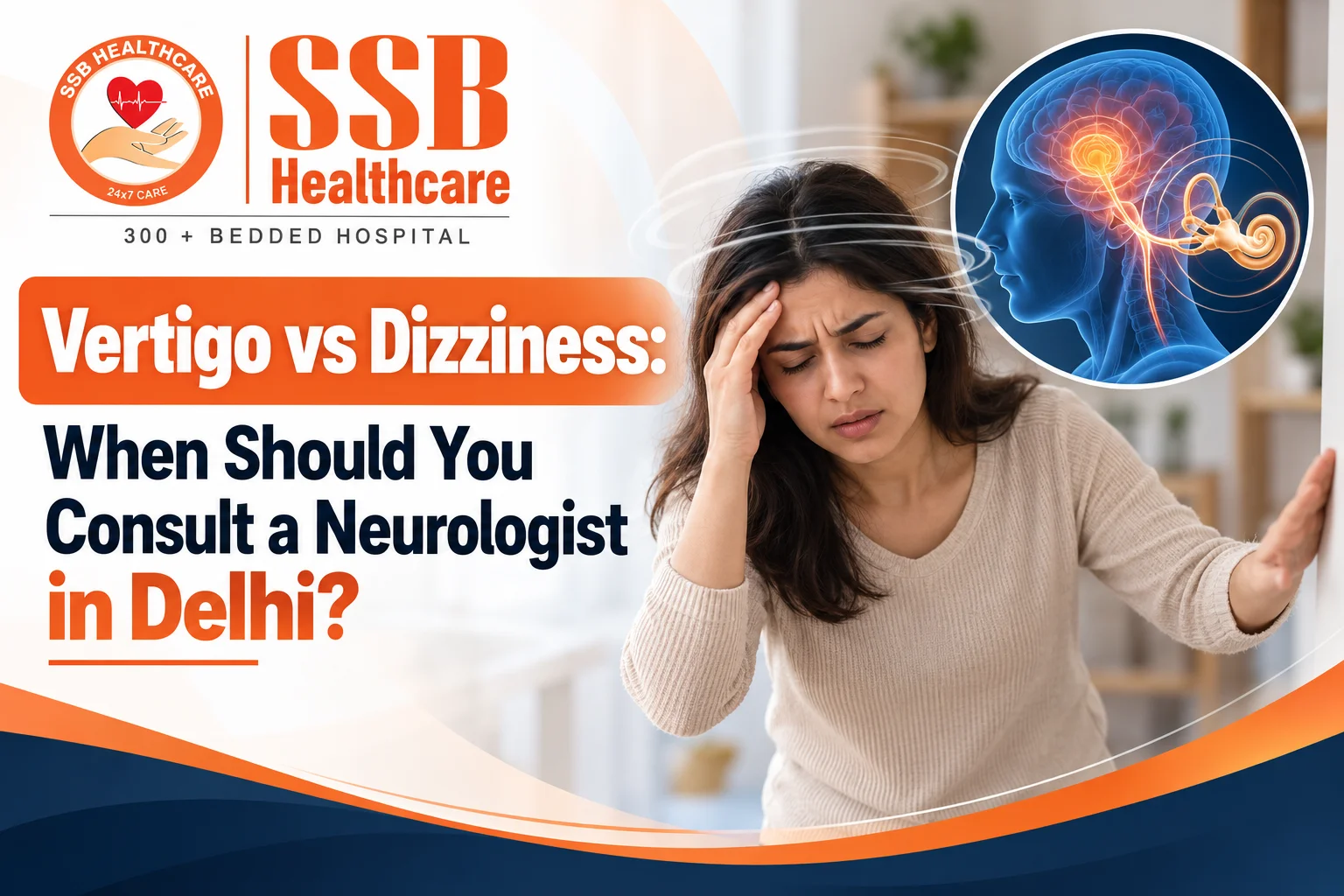
Vertigo is a specific type of dizziness that creates a false sensation of movement or spinning. Dizziness is a broader term that can include feeling faint, unsteady, light-headed or off balance.
Some episodes occur because of temporary changes in blood pressure, dehydration or problems with the inner ear. Others may be associated with migraine or neurological conditions.
Understanding what you feel, how long it lasts and whether other symptoms occur can help determine when medical assessment is needed and whether a neurologist in Delhi is the appropriate specialist.
Although people often use the words interchangeably, vertigo and dizziness are not exactly the same.
Dizziness describes several sensations, including feeling faint, light-headed, unstable or as though you might lose your balance.
Vertigo refers specifically to the illusion that you or your surroundings are moving. Many patients describe it as the room spinning, although it can also feel like tilting or swaying.
| Feature | Vertigo | Other types of dizziness |
|---|---|---|
| Main sensation | Spinning, tilting or false movement | Light-headedness, faintness or unsteadiness |
| Common causes | Inner ear disorders, vestibular migraine and certain neurological conditions | Dehydration, blood pressure changes, medication effects and other conditions |
| Typical triggers | Sometimes head-position changes | Standing suddenly, illness or medication use |
| Balance problems | Common | May or may not occur |
| Associated nausea | May be prominent | Depends on the underlying cause |
These patterns can guide an assessment but cannot confirm a diagnosis by themselves.
Vertigo often develops when the vestibular system is affected. This system includes structures in the inner ear and pathways in the brain that help maintain balance and interpret movement.
Several conditions can disrupt how this system functions.
BPPV is a common cause of short episodes of spinning triggered by changes in head position.
It occurs when tiny calcium carbonate particles become displaced within the inner ear's balance structures.
You may experience vertigo when rolling over in bed, looking upward or bending down.
The spinning sensation typically lasts less than a minute during an individual episode, although nausea or unsteadiness may continue afterwards.
BPPV can often be treated with specific repositioning manoeuvres performed by appropriately trained professionals.
Vestibular neuritis affects the vestibular nerve, which carries balance-related information from the inner ear to the brain.
It may cause sudden, sustained vertigo, nausea, vomiting and difficulty walking.
Symptoms can be severe and may continue for days.
Because certain strokes can produce similar symptoms, sudden continuous vertigo with significant imbalance requires urgent medical assessment.
Labyrinthitis involves inflammation affecting inner ear structures responsible for hearing and balance.
It can cause vertigo, nausea and hearing changes.
New hearing loss associated with acute vertigo should receive prompt assessment rather than being assumed to be a routine ear infection.
Ménière's disease is an inner ear disorder that may cause recurrent vertigo episodes.
Other possible symptoms include fluctuating hearing loss, tinnitus and a feeling of fullness in the ear.
Diagnosis depends on the history and appropriate hearing assessment.
Vestibular migraine is a neurological condition in which episodes of vertigo or dizziness are associated with migraine mechanisms.
Some patients also experience light sensitivity, sound sensitivity, nausea or headaches.
However, vestibular migraine can occur without a headache during the dizziness episode.
A neurologist may consider this diagnosis when episodes recur and the clinical history supports migraine.
Not all dizziness comes from the inner ear or brain's balance pathways.
Some people experience light-headedness, especially when standing up or after prolonged periods without adequate food or fluids.
Orthostatic hypotension occurs when blood pressure drops after moving from sitting or lying down to standing.
It may produce light-headedness, blurred vision or a feeling that you might faint.
Inadequate fluid intake, vomiting, diarrhoea or excessive sweating may contribute to dizziness.
This can be particularly relevant during hot weather, but repeated symptoms should not automatically be attributed to heat.
Hypoglycaemia may cause trembling, sweating, weakness, confusion and dizziness.
It is especially important to consider in people with diabetes who take certain glucose-lowering medicines.
Some blood pressure medicines, sedatives and other medications can produce dizziness.
If symptoms begin after a medication change, discuss this with the prescribing clinician rather than stopping the medicine independently.
Abnormal heart rhythms and certain cardiovascular conditions can cause light-headedness or fainting.
Dizziness accompanied by chest pain, significant palpitations or loss of consciousness requires prompt assessment.
The timing and triggers of dizziness provide useful diagnostic clues.
If the room briefly spins when you roll over in bed, tilt your head or look upward, BPPV may be a possible explanation.
If you feel faint when standing up, a blood pressure-related cause may be more likely.
However, patients can experience different conditions that produce overlapping symptoms.
A doctor may ask whether the episode lasts seconds, minutes, hours or longer and whether you experience hearing changes, headaches or difficulty walking.
The examination helps establish whether the problem is related to the vestibular system, circulation or another medical condition.
Yes. Although many vertigo episodes arise from inner ear disorders, some are associated with conditions affecting the brain or central nervous system.
Vestibular migraine can produce repeated episodes of vertigo or movement sensitivity.
A migraine-related cause becomes more relevant when the patient has a history of migraine or accompanying light or sound sensitivity.
A stroke involving the brainstem or cerebellum can sometimes cause sudden vertigo, vomiting and severe imbalance.
Importantly, not every patient with a posterior circulation stroke experiences obvious arm weakness or facial drooping.
Sudden severe continuous vertigo with inability to walk normally requires emergency assessment, even when the person does not have a headache.
Other neurological symptoms, such as double vision, difficulty speaking or new weakness, increase concern.
Less commonly, disorders affecting the cerebellum or other neurological pathways may contribute to imbalance or dizziness.
The diagnosis depends on the pattern of symptoms and neurological examination rather than dizziness alone.
The investigation begins with a detailed symptom history.
A doctor may ask how the sensation started, whether it involves spinning or faintness, how long episodes last and whether specific movements trigger them.
The clinician may also ask about hearing loss, tinnitus, migraine, medicines and previous illnesses.
The examination may assess eye movements, coordination, walking, reflexes and other neurological functions.
These findings help identify whether urgent investigation or specialist referral is needed.
For suspected BPPV, a trained clinician may perform the Dix–Hallpike manoeuvre.
This involves specific changes in head and body position while observing for characteristic eye movements.
The test may temporarily reproduce vertigo.
Hearing tests may be recommended when symptoms suggest an inner ear disorder.
Other vestibular tests may be useful in selected patients.
Imaging is not necessary for every patient with dizziness.
A neurologist may recommend MRI or other investigations when the clinical findings suggest a central neurological condition.
Emergency stroke assessment requires a different pathway. Early imaging, particularly CT, may not exclude every posterior circulation stroke.
The decision should therefore be guided by trained clinical assessment rather than one test result alone.
Treatment depends on the underlying diagnosis. There is no single medicine or exercise that is appropriate for every type of vertigo.
When BPPV is confirmed, trained clinicians may use canalith repositioning manoeuvres, such as the Epley manoeuvre, to move displaced particles within the inner ear.
The correct technique depends on the affected side and canal.
These manoeuvres are not appropriate for every patient, particularly when certain cervical spine problems or other contraindications are present.
Vestibular rehabilitation involves individually selected exercises that help improve balance and compensation for certain vestibular conditions.
It may be useful for persistent imbalance after some inner ear disorders.
For vestibular migraine, management may involve identifying relevant triggers, improving regularity of sleep and meals, and considering migraine-specific treatment.
Preventive medicines may be appropriate for some patients, depending on the frequency and severity of episodes.
When dizziness is caused by blood pressure changes, medication effects or metabolic conditions, treatment focuses on the underlying problem.
Medicines for nausea or severe vertigo may be prescribed for short-term symptom relief in selected cases. Prolonged use is not always appropriate because it may interfere with vestibular recovery.
A neurologist may be an appropriate specialist when dizziness is unexplained, repeatedly occurs or is accompanied by symptoms suggesting a neurological cause.
Consider a neurological assessment if:
However, a neurologist is not always the first specialist required.
A general physician can initially assess many forms of light-headedness or dizziness. An ENT specialist may be more appropriate when hearing loss, tinnitus or an inner ear disorder is suspected.
Seek immediate emergency assessment for sudden vertigo or dizziness with new difficulty speaking, double vision, significant weakness, facial drooping or severe inability to stand or walk.
Sudden severe continuous vertigo, particularly with marked gait imbalance, may require emergency evaluation even without those additional symptoms.
New hearing loss accompanying acute vertigo also warrants urgent assessment.
Do not drive yourself if you are severely dizzy.
For non-emergency neurological concerns, information about Neurology services at SSB Healthcare in Delhi can help you understand the available specialty pathway.
If you suddenly feel dizzy, sit or lie down in a safe place to reduce the chance of falling.
Avoid driving, climbing ladders or using machinery while symptoms are present.
Move slowly when changing position, and get assistance if walking feels unsafe.
If you are able to drink safely, maintaining adequate hydration may help when fluid loss is contributing to light-headedness.
Do not assume that drinking water or resting will resolve all causes of dizziness.
When episodes recur, keep a record of their duration, triggers and associated symptoms. This can be useful during medical evaluation.
Not necessarily. Vertigo describes a specific sensation of movement, whereas dizziness is broader. Either can have a relatively minor or serious cause depending on the clinical circumstances.
Yes. BPPV, vestibular migraine and several other conditions can cause vertigo without an active ear infection.
Brief spinning triggered by rolling over or changing head position may occur with BPPV. A trained clinician can perform positional testing to assess this possibility.
Yes. Stress and anxiety may contribute to light-headedness or other dizziness sensations. Persistent symptoms should not automatically be attributed to anxiety without considering other causes.
No. MRI is considered when the medical history or examination suggests a central neurological cause. Many common vestibular conditions can be evaluated clinically.
ENT assessment may be appropriate for suspected inner ear conditions, especially when hearing symptoms occur. Neurological evaluation may be appropriate for vestibular migraine, unexplained recurrent vertigo or other neurological findings. Emergency symptoms require immediate medical care rather than routine specialist booking.
Vertigo and dizziness are related symptoms, but they do not always have the same causes.
Vertigo typically involves an illusion of movement, while dizziness may also include light-headedness, faintness or imbalance. Common explanations range from BPPV and vestibular migraine to blood pressure changes and other medical conditions.
Understanding the timing, triggers and associated symptoms can help guide appropriate evaluation. Recurrent or unexplained episodes deserve assessment, while sudden severe symptoms with significant imbalance or neurological changes require emergency care.
For information about neurological evaluation in Delhi, visit SSB Healthcare's Neurology department. Patients with suspected inner ear disorders can also explore its ENT services in Delhi.
2026 © SSB Heart and Multispecialty Hospital.
 International
 Find a
 Lab
 Health
 Careers