
 September 13, 2026
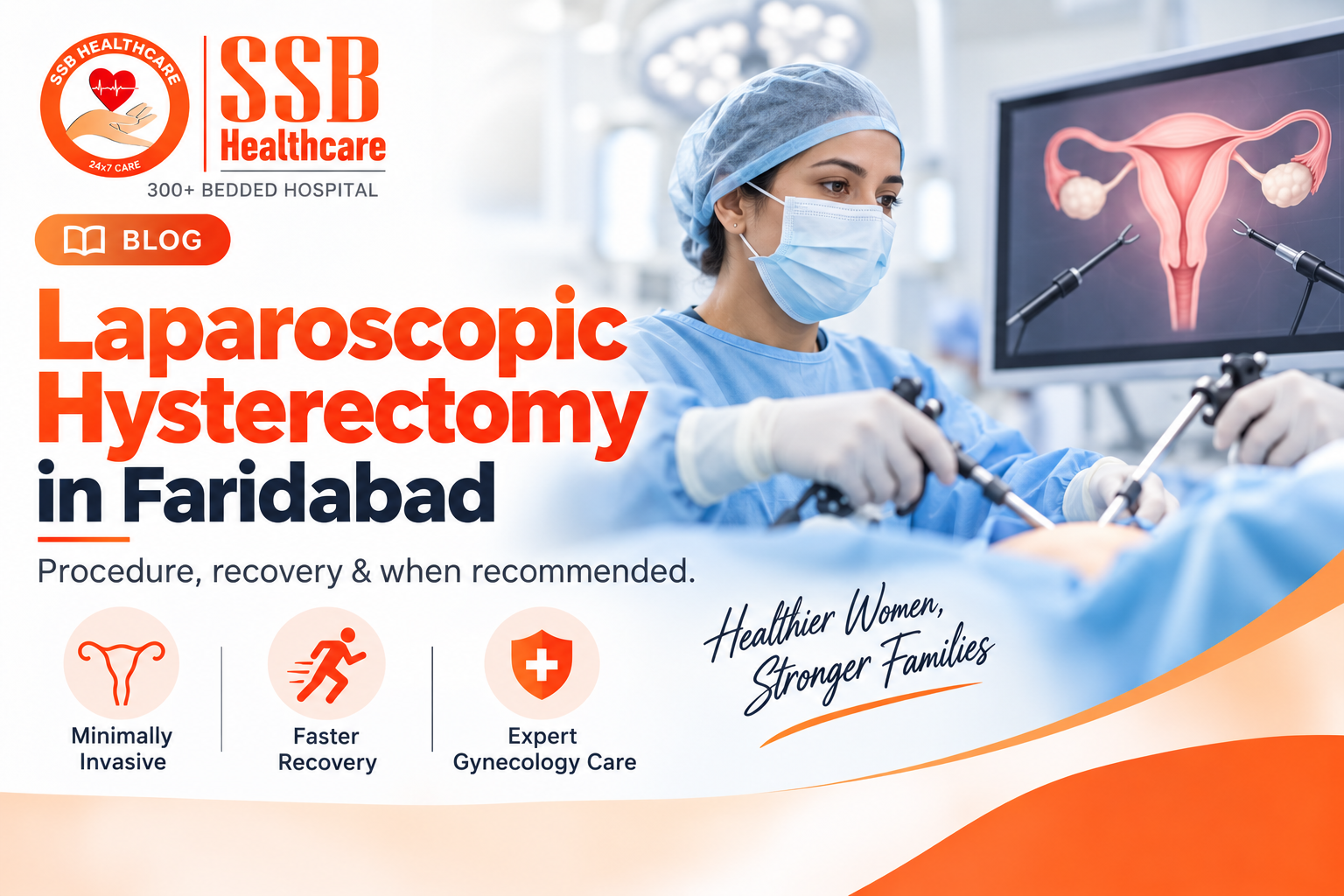
If you are searching for laparoscopic hysterectomy in Faridabad, you are probably trying to answer a practical question: what is happening, what treatment may be needed, how recovery works, and when you should see a specialist. Hysterectomy is surgery to remove the uterus. It may be advised for selected cases of fibroids, abnormal bleeding, prolapse, endometriosis, chronic pain or cancer. The route can be laparoscopic, vaginal or abdominal depending on the condition and patient factors. At SSB Hospital, Faridabad, care related to this topic is handled through the relevant specialty team. This guide explains the usual decision process in simple language. It is educational and does not replace an examination or individual medical advice.
Quick answer: The right approach to hysterectomy depends on the confirmed diagnosis, severity, test results and your overall health. Treatment may range from observation or medicines to a procedure or surgery. A specialist consultation is the safest way to match the option to the individual case.
Hysterectomy is surgery to remove the uterus. It may be advised for selected cases of fibroids, abnormal bleeding, prolapse, endometriosis, chronic pain or cancer. The route can be laparoscopic, vaginal or abdominal depending on the condition and patient factors. If you are researching laparoscopic hysterectomy in Faridabad, the most useful first step is to understand what the term means, what problem the treatment is intended to solve, and what information a doctor needs before recommending a plan. This article is written for patients and families who want a practical overview before a consultation.
Doctors usually begin with a detailed history: when symptoms started, what makes them better or worse, previous episodes, medicines, allergies and other illnesses. Examination then guides the need for tests. For hysterectomy, investigations are chosen to answer a specific question rather than ordered automatically for every person.
SSB Hospital’s Faridabad Obstetrics & Gynecology department lists antenatal and postnatal care, high-risk pregnancy care, labour and delivery, laparoscopic and hysteroscopic surgery, PCOD/hormone-related care, infertility treatment and fibroid treatment.
Treatment is selected according to the confirmed diagnosis, severity, expected benefit, alternatives and patient preferences. For hysterectomy, conservative care may be reasonable for some people while others need a procedure or surgery. The clinician should explain what happens if treatment is delayed and what signs would change the plan.
If a procedure is planned, the team will discuss preparation such as fasting, medication adjustments, anaesthesia, consent and arrival time. Never stop prescribed blood thinners, diabetes medicines or other long-term medication on your own; ask the treating team for individualized instructions.
Gynaecology and pregnancy care should be individualized around symptoms, medical history, age, pregnancy plans and personal preferences. The same diagnosis can lead to different appropriate treatment choices in different patients.
SSB Hospital’s Faridabad Obstetrics & Gynecology department lists antenatal and postnatal care, high-risk pregnancy care, labour and delivery, laparoscopic and hysteroscopic surgery, PCOD/hormone-related care, infertility treatment and fibroid treatment.
Recovery is a process rather than a single date. Pain control, wound care, diet, bowel or bladder function when relevant, mobility and return to normal activity are reviewed step by step. Follow discharge instructions and attend follow-up even if you feel well, because some problems are easier to manage when detected early.
For pregnancy-related concerns, emergency symptoms should be assessed promptly. Online information cannot determine whether a pregnancy symptom is urgent.
Every treatment has trade-offs. Ask what benefit is expected in your situation, what the common side effects are, which complications are uncommon but important, whether an alternative exists, and what might require conversion to a different procedure. Shared decision-making is especially important when more than one reasonable option exists.
Heavy bleeding with weakness, severe pelvic pain, fever or rapidly worsening symptoms should be assessed promptly. When symptoms are severe or rapidly worsening, do not delay emergency assessment in order to compare hospitals, packages or online advice.
SSB Hospital’s Faridabad Obstetrics & Gynecology department lists antenatal and postnatal care, high-risk pregnancy care, labour and delivery, laparoscopic and hysteroscopic surgery, PCOD/hormone-related care, infertility treatment and fibroid treatment.
SSB Hospital in Faridabad provides specialty-based care relevant to this topic. For laparoscopic hysterectomy in Faridabad, the purpose of an appointment is not simply to ‘book a procedure’; it is to confirm the diagnosis and decide on the safest appropriate next step. Bring your reports, medication list and questions so the consultation can focus on decisions that matter to you.
No two cases of hysterectomy are identical. Anatomy, severity, previous surgery, infection, medicines, pregnancy status when relevant, body weight, heart and lung health, kidney function and other factors can influence the technique and anaesthesia plan. This is why a procedure description on the internet cannot replace a surgeon or specialist reviewing your individual reports.
Before treatment, plan for transport, time away from work, help at home and follow-up. Ask when you can shower, drive, climb stairs, lift weight, return to exercise and restart regular medicines. Good preparation makes discharge instructions easier to follow and reduces avoidable anxiety.
Consent should cover the purpose of the proposed treatment, likely benefits, material risks, alternatives and what may happen without treatment. It is reasonable to ask the clinician to explain unfamiliar terms in plain language and to repeat instructions if something is unclear.
SSB Hospital’s official website lists antenatal and postnatal care, high-risk pregnancy care, delivery services, laparoscopic and hysteroscopic surgery, PCOD/hormonal care, infertility care and fibroid treatment.
Patients should still confirm the exact service, treating clinician, availability, expected outcomes and costs for their individual diagnosis at the time of consultation.
Internal link: Relevant SSB Hospital specialty page
If you have symptoms related to hysterectomy or have already been advised to consider treatment, arrange a consultation with the relevant SSB Hospital specialty team. Bring previous reports, scans, prescriptions and your current medicines list. For severe or rapidly worsening symptoms, use emergency services rather than waiting for a routine appointment.
No. Suitability depends on the diagnosis, severity, test results, other medical conditions and the treating specialist’s assessment. A consultation is needed to decide whether the approach discussed in this article is appropriate for you.
The need for treatment depends on symptoms, examination and tests. Persistent pain, repeated episodes, functional limitation, obstruction, bleeding or other complications may change the recommendation. Your clinician should explain the reason for treatment and alternatives.
Tests vary by condition. They may include blood tests, urine tests, ultrasound, X-ray, CT, MRI or other targeted investigations. Pre-operative assessment may also include anaesthesia review and tests based on age and health history.
Recovery varies widely according to the procedure, disease severity, age, fitness, other illnesses and whether complications occur. Ask your treating team for a realistic timeline for walking, work, driving, exercise and wound care.
Some procedures can be day-care or short-stay, while others need one or more nights. The expected stay should be discussed after the doctor knows the exact procedure and your medical condition.
Ask about common side effects, important but uncommon complications, anaesthesia risks, infection, bleeding, pain control, possible need for a different or additional procedure, and what symptoms should trigger an urgent call after discharge.
An exact medical bill usually cannot be confirmed from a generic online figure. Costs depend on tests, procedure complexity, consumables or implants when needed, anaesthesia, room category, length of stay, medicines and insurance terms. Request a written estimate after evaluation.
Not always. Coverage depends on your policy, waiting periods, exclusions, room-rent limits, co-pay, consumable rules and pre-authorization. Confirm both hospital empanelment and insurer approval before planned treatment.
Seek urgent care for severe or rapidly worsening symptoms, fainting, breathing difficulty, uncontrolled bleeding, high fever, persistent vomiting, new neurological weakness, inability to pass urine, or any emergency warning sign described by your treating team.
Use SSB Hospital’s official website or appointment contact details to request a consultation with the relevant department. Bring previous reports, imaging, prescriptions and a current medicines list so the clinician can review your case efficiently.
This article provides general educational information and is not a diagnosis or a substitute for consultation with a qualified healthcare professional. Treatment, recovery and risks vary by person. If symptoms are severe, sudden or rapidly worsening, seek urgent medical care.


2026 © SSB Heart and Multispecialty Hospital.
 International
  Find a
  Lab
Lab  Health
  Careers