 December 26, 2020
Arthritis of the knee joint means damage to the cartilage of the joint. The most common cause of arthritis is age-related degeneration, commonly referred to as osteoarthritis of the knee joint. Other causes of arthritis include post-traumatic arthritis (after injury), inflammatory disorders such as rheumatoid arthritis, and arthritis caused by infections.
When arthritis affects the knee joint, patients often experience pain that gradually worsens over time. In many cases, deformities around the joint, such as bowing of the legs, may also develop. During the early stages of arthritis, doctors usually recommend a multimodal treatment approach that may include exercises, physiotherapy, lifestyle modifications, weight management, precautions during daily activities, and medications to reduce pain and inflammation.
However, when the cartilage damage becomes extensive, even simple daily activities such as walking, climbing stairs, sitting, or standing for long periods can become extremely painful. In severe cases, patients may find it difficult to stand or walk independently. At this stage, surgery may be advised depending on the severity of joint damage. Based on the condition of the knee joint, either partial knee replacement or total knee replacement surgery may be recommended. In this procedure, the damaged cartilage and worn-out surfaces of the knee joint are replaced with artificial bearing surfaces designed to restore movement and reduce pain.
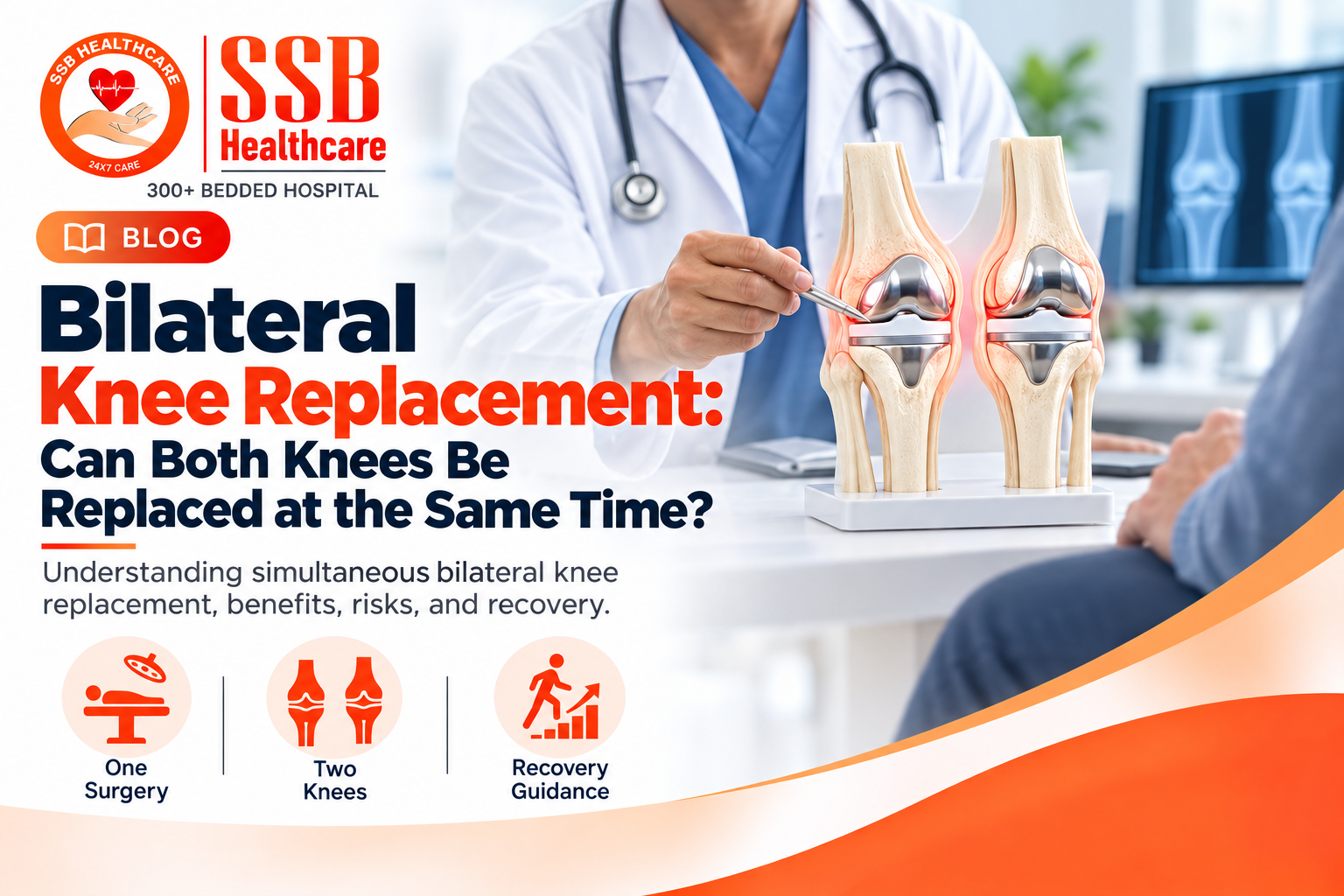
Total Knee Replacement (TKR), also known as knee arthroplasty, is a surgical procedure in which the damaged portions of the knee joint are replaced with specially designed artificial implants. These implants help recreate the smooth movement of a healthy knee joint and improve the patient’s mobility and quality of life.
The surgery is commonly recommended for patients who suffer from severe knee pain and stiffness that does not improve with medications, injections, physiotherapy, or other non-surgical treatments.
A patient may be advised total knee replacement surgery if they experience:
Ignoring persistent knee pain can worsen the condition over time and may lead to further joint damage.
Several conditions can lead to severe knee joint damage, including:
Early diagnosis and treatment can help slow down the progression of joint damage and may delay the need for surgery.
Total knee replacement surgery offers several benefits for patients suffering from advanced arthritis, including:
With modern advancements in orthopaedic surgery, recovery after knee replacement has become faster and safer for many patients.
Over the decades, there have been major advancements in surgical techniques as well as implants used in knee replacement surgery.
Nowadays, total knee replacement surgery is often performed using advanced precision-based technology such as computer-assisted navigation and fast-track recovery protocols. These advanced techniques help improve implant positioning, surgical accuracy, and overall outcomes.
Fast-track recovery protocols allow many patients to begin walking on the same day of surgery under medical supervision. This approach helps reduce recovery time, lowers the risk of complications, and supports quicker rehabilitation.
Recovery after total knee replacement varies from patient to patient, but most individuals can gradually resume normal daily activities within a few weeks to months.
Post-surgery rehabilitation usually includes:
Following the doctor’s advice and maintaining regular physiotherapy sessions are important for achieving the best results after surgery.
To reduce stress on your knee joints and maintain joint health:
If one suffers from joint pain, it should not be ignored. Early consultation with an orthopaedic specialist can help diagnose the problem at an early stage and may help preserve the natural joint for a longer time.
2026 © SSB Heart and Multispecialty Hospital.
 International
  Find a
  Lab
Lab  Health
  Careers