 August 6, 2026
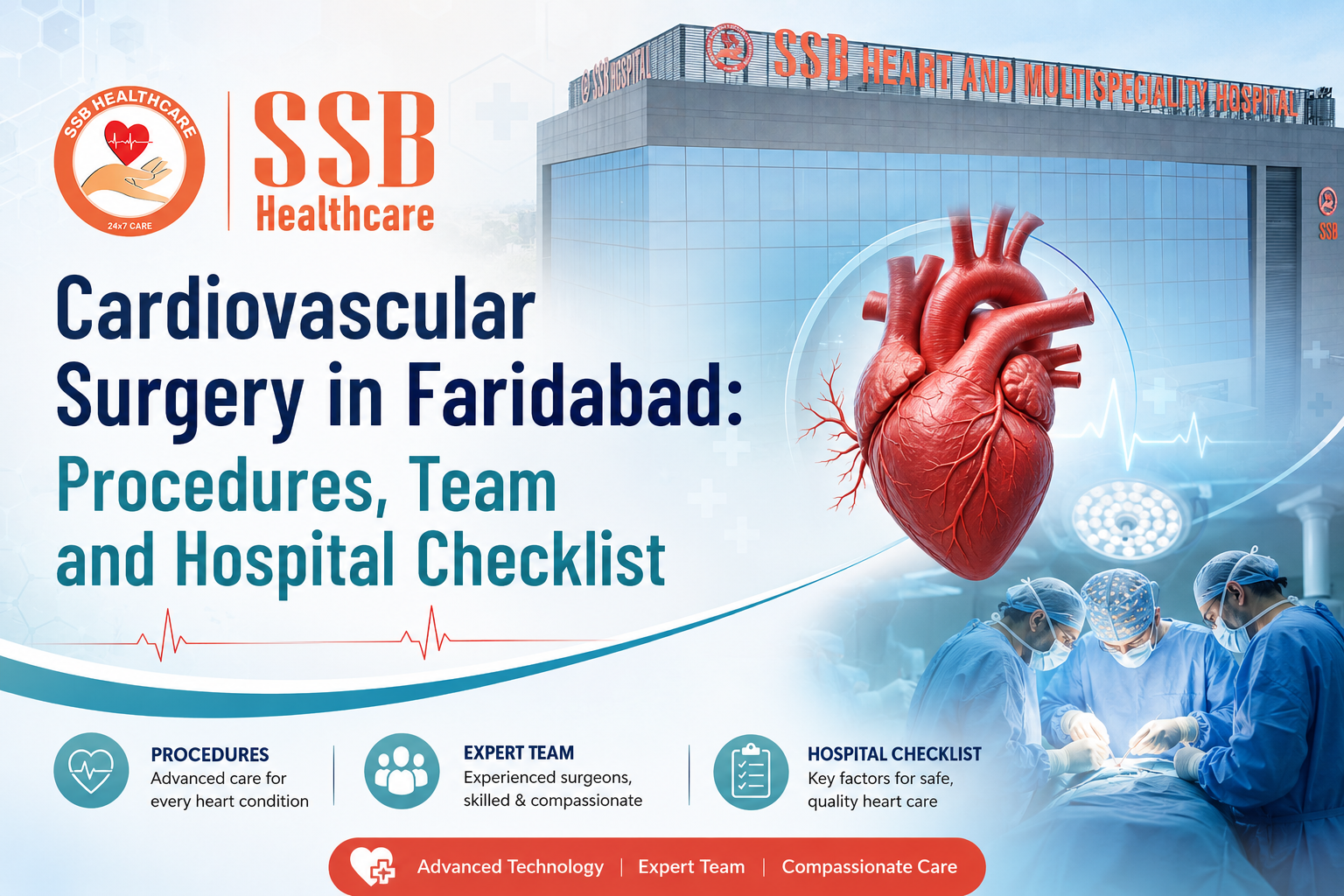
When you or a family member is advised to seek an opinion for cardiovascular surgery in Faridabad, understanding the diagnosis and available treatment options is an important first step.
Cardiovascular surgery includes procedures involving the heart and blood vessels. Depending on the condition, these may include coronary artery bypass grafting (CABG), heart valve repair or replacement, aortic surgery, congenital heart procedures and selected vascular surgeries.
A cardiologist and specialist from the Cardiothoracic & Vascular Surgery Department may evaluate the same patient from different treatment perspectives. The aim is to determine whether medicines, a catheter-based procedure, surgery or another approach is appropriate for the individual's condition.
This guide explains common cardiovascular procedures and the practical factors patients and families should consider when selecting a hospital and surgical team.
Not every cardiovascular condition requires surgery. The first step is establishing the diagnosis, understanding its severity and determining whether surgical treatment is likely to provide benefit.
Conditions that may require cardiovascular surgical evaluation include:
For patients with significant coronary artery disease, the medical team may compare angioplasty and bypass surgery before recommending an approach.
The right treatment depends on coronary anatomy, symptoms, heart function, associated medical conditions, age, surgical risk and several other clinical factors.
| Situation | Suggested Action | Why It Matters |
|---|---|---|
| Complex coronary artery narrowing | Request specialist or heart-team review | Bypass and catheter-based options may need comparison |
| Severe valve disease with symptoms | Discuss procedure options and timing | Significant valve disease may affect heart function |
| Stable disease before planned surgery | Complete pre-operative assessment | Medical conditions and medicines may need optimisation |
| Severe chest pain, collapse or sudden breathlessness | Seek emergency medical care | An acute cardiovascular emergency may be present |
Complex cardiovascular care usually involves more than a single surgeon.
Depending on the patient's condition, the care team may include:
Coordinated care becomes especially important when there are multiple treatment options.
For example, a patient with complex coronary disease may need a discussion about whether CABG surgery or a catheter-based procedure is likely to be more appropriate.
Patients should understand who is leading their treatment plan, which specialists are involved and how decisions will be communicated.
Cardiovascular surgery should be planned after appropriate investigations.
Depending on the clinical situation, doctors may recommend tests such as:
Coronary angiography and other investigations help doctors understand the location and severity of blocked arteries.
Echocardiography can provide information about heart pumping function, valve structure and blood flow through the heart.
Ask whether previously completed investigations can be reviewed before repeating them. Repeat testing may sometimes be necessary, but it should have a clear clinical purpose.
The exact procedure recommended depends on the patient's diagnosis, anatomy and overall medical condition.
Coronary artery bypass grafting, or CABG, is a surgical procedure used in selected patients with significant coronary artery disease.
During CABG, suitable blood vessels are used to create an alternative route for blood to reach heart muscle beyond narrowed or blocked coronary arteries.
Read more about what CABG is and how bypass surgery is performed.
CABG is not automatically the right treatment for every coronary blockage. Doctors compare the expected benefits and risks of surgery with angioplasty, medical therapy and other options.
Heart valves control the direction of blood flow through the heart. Significant narrowing or leakage may interfere with normal heart function.
Depending on the type and severity of heart valve disease, treatment may involve:
When valve replacement is recommended, patients should discuss the type of valve, expected durability, medicines required after surgery and follow-up requirements.
The aorta is the body's largest artery.
Certain aneurysms, dissections or other structural problems involving the aorta may require surgical evaluation. Treatment decisions depend on the location and size of the abnormality, symptoms, rate of progression and the patient's individual risk profile.
Some structural heart abnormalities are present from birth and may require surgical correction. Treatment varies considerably depending on the specific defect, age of the patient and effect on heart function.
Selected diseases affecting blood vessels outside the heart may require vascular intervention or surgery.
The recommended procedure depends on which blood vessel is affected, the extent of disease and whether circulation is significantly compromised.
A smaller incision or off-pump technique is not automatically better or safer for every patient.
Suitability depends on:
Patients should ask why a particular surgical technique is recommended rather than choosing an approach based solely on incision size.
Before agreeing to a major operation, patients and their families should clearly understand the treatment plan.
Useful questions include:
Potential risks vary between patients and procedures. The surgeon can explain how factors such as age, diabetes, kidney function, lung health, heart function and previous operations influence individual risk.
Cardiovascular procedures can involve multiple components of hospital care.
Ask for a written estimate that explains costs related to:
Patients using insurance should also confirm:
Insurance approval does not necessarily mean every expense associated with treatment will be covered.
Pre-operative preparation helps the surgical team identify and manage factors that may affect treatment or recovery.
If you are unsure which specialist should review your case, you can find a cardiac specialist at SSB Healthcare.
Successful cardiovascular surgery does not mark the end of heart care.
Recovery may involve:
Before discharge, patients and caregivers should understand:
The first weeks after surgery can be easier to manage when these instructions are clear before leaving the hospital.
Not necessarily.
A referral to a cardiovascular surgeon means the case requires surgical assessment. After reviewing the condition, investigations and overall risk, the team may recommend surgery, another intervention or continued medical management.
Not for every patient.
The safest and most appropriate technique depends on anatomy, the required procedure and individual clinical factors.
Surgery can address specific cardiovascular problems, but long-term cardiovascular health often still requires medicines, lifestyle measures and regular follow-up.
Controlling blood pressure, cholesterol, diabetes and smoking remains important after many cardiovascular procedures.
SSB Heart & Multispeciality Hospital, Faridabad provides cardiac and multispeciality care for patients requiring evaluation and treatment of cardiovascular conditions.
Its Cardiothoracic & Vascular Surgery Department includes cardiovascular surgical services such as bypass surgery, valve procedures, aortic surgery, congenital cardiac procedures and selected vascular surgeries.
The hospital is located at:
Plot No. 69, Mathura Road, Near Neelam Flyover, Sector 20A, Faridabad, Haryana – 121002.
Patients should confirm current doctor schedules, service availability, investigations and individual treatment suitability directly with the hospital before admission.
Do not wait for a routine cardiovascular surgery appointment when symptoms suggest a medical emergency.
Urgent medical assessment may be required for:
If symptoms are severe or rapidly worsening, seek emergency medical care rather than waiting for an outpatient consultation.
Cardiovascular surgery refers to operations performed on the heart or blood vessels. Depending on the condition, procedures may include coronary artery bypass grafting, heart valve repair or replacement, aortic surgery, congenital cardiac surgery and selected peripheral vascular operations.
CABG may be considered in selected patients with significant coronary artery disease, particularly when the pattern or complexity of blockages makes surgical bypass an appropriate option. The final decision depends on coronary anatomy, symptoms, heart function, other medical conditions and assessment by the treating cardiac team.
Neither treatment is universally better. The appropriate option depends on the number and location of blocked arteries, complexity of disease, diabetes, heart function, symptoms and individual risk. A cardiac team may compare angioplasty and bypass surgery before recommending treatment.
Recovery varies according to the procedure, overall health, complications and individual healing. Patients should follow the surgeon's guidance regarding wound care, physical activity, medicines, rehabilitation and return to routine activities.
Bring previous coronary angiography, ECG, echocardiography, CT or other cardiac imaging, blood-test reports, hospital discharge summaries and a current medication list. Carrying complete records can help specialists understand previous investigations and treatment.
Consider the experience relevant to your condition, availability of cardiology and cardiovascular surgery, diagnostic facilities, ICU and critical care support, multidisciplinary decision-making, emergency facilities, rehabilitation and continuity of follow-up rather than judging a hospital on a single factor.
If you are considering cardiovascular surgery in Faridabad, start with an evaluation of the exact heart or vascular condition rather than choosing a surgical procedure independently.
An appropriate specialist can review your symptoms, previous reports and imaging and explain whether medicines, angioplasty, surgery or another treatment strategy should be considered.
You can find a doctor at SSB Healthcare or book an appointment for further evaluation.
For severe or rapidly worsening symptoms, seek emergency medical care rather than waiting for a routine appointment.
This article is intended for general health awareness and educational purposes only. It does not diagnose cardiovascular disease or determine whether surgery is appropriate for an individual patient. Cardiovascular treatment decisions depend on clinical evaluation, investigations and individual health factors. Consult a qualified cardiologist or cardiovascular surgeon for personalised medical advice.
2026 © SSB Heart and Multispecialty Hospital.
 International
  Find a
  Lab
Lab  Health
  Careers