 October 1, 2026
Forty is not a switch that suddenly turns heart disease on. It is a useful point to review risks that may have accumulated quietly over the years. Blood pressure can rise without symptoms. Cholesterol and blood sugar can change while daily life feels entirely normal. A heart health checkup after 40 in Delhi should therefore be a conversation about your own risks and priorities, followed by tests that answer specific questions.
Perhaps your father had a heart attack in his fifties. Perhaps a routine office screening found a high blood pressure reading, or you have diabetes and have not reviewed your cholesterol recently. You may simply want to know whether your current habits are enough. Those are all reasonable reasons to arrange a preventive review. The visit should leave you with an understandable plan, rather than a stack of test results you cannot interpret.
Before discussing machines or scans, a clinician needs to understand your background. Age matters, but it is one part of the picture. Blood pressure, diabetes, cholesterol, smoking or other tobacco use, kidney disease, body weight, activity, medicines and family history all contribute. A parent or sibling who developed heart disease relatively early is especially relevant.
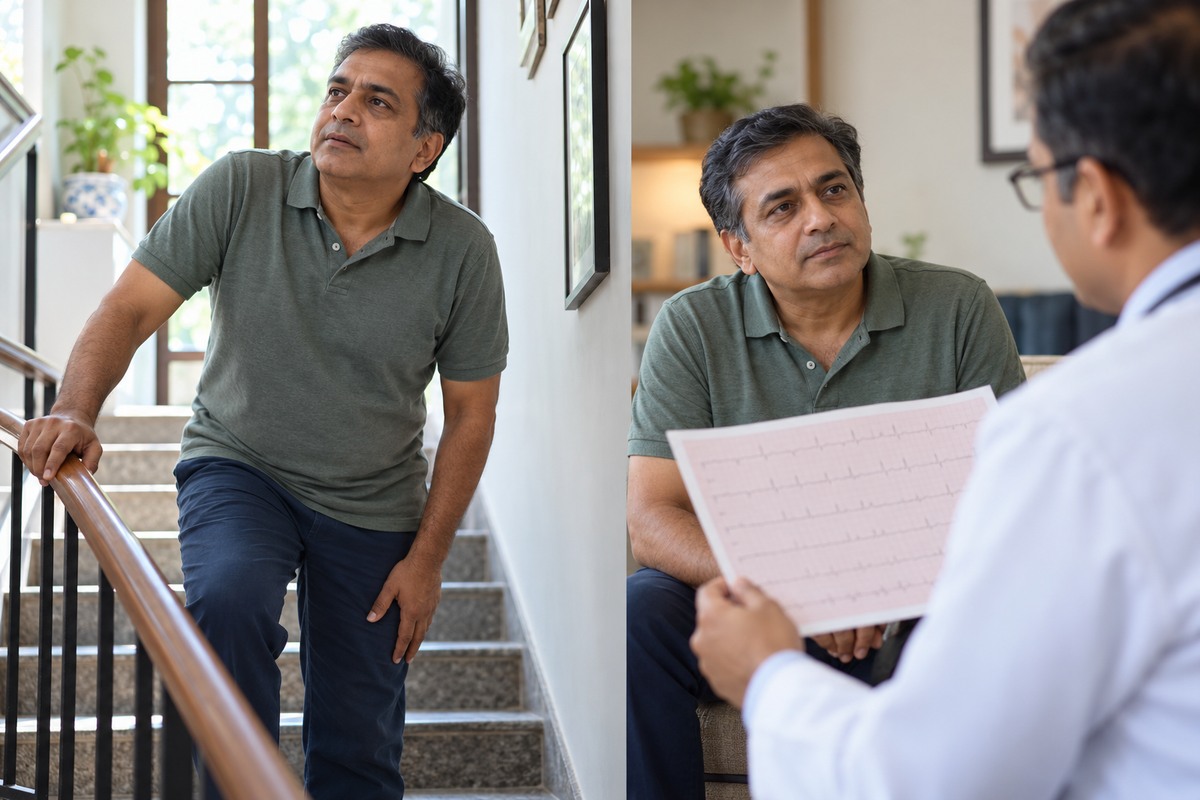
Women should mention high blood pressure or diabetes during pregnancy, as well as a history of early menopause, where relevant. Everyone should mention symptoms such as chest pressure, breathlessness on exertion, fainting or a sudden change in exercise tolerance. An appointment for prevention can become a symptom assessment if such details emerge.
Make a short note before you go. Include health conditions, daily medicines, supplements, tobacco use, and the approximate ages at which close relatives developed heart disease or stroke. If you measure blood pressure at home, take several dated readings. One isolated high or normal reading gives less information than a pattern.
Blood pressure is fundamental. The team may repeat it after a rest or ask for home readings if the result is uncertain. A lipid profile helps assess cholesterol. Blood glucose or HbA1c may help identify or monitor diabetes. Weight and waist measurement can add context; they should not be used as a judgement on appearance. Kidney function may matter, particularly if you have diabetes or hypertension or are taking certain medicines.
These numbers are interpreted together. A cholesterol result that calls for one plan in a person with diabetes may call for another in someone with few other risks. Likewise, a normal ECG does not erase the effect of persistent high blood pressure. Ask the clinician to explain what the results mean for you and which changes would make the greatest difference.
Formal cardiovascular risk calculators can support a conversation, but their estimates may not capture every detail of an individual’s history. The point is shared decision making: what risk factors are present, what can change, whether medicine is appropriate, and when to review progress. Do not start an aspirin or cholesterol medicine solely because a friend of the same age takes one.
Many people assume a complete heart checkup must include every available test. In fact, different tests answer different questions. An ECG records electrical activity during a short period. An echocardiogram shows heart structure and pumping with ultrasound. An exercise test can assess selected concerns that appear with exertion. A cardiologist may advise one, several or none after examining you.
For a person without symptoms, the most useful starting information may be a careful history, blood pressure, cholesterol and blood sugar. If you have palpitations, a murmur, breathlessness, exercise related discomfort or a known heart condition, additional tests may be appropriate. Ask, “What are we looking for?” and “How will this result change the plan?” The answers make testing more meaningful.
If you currently have severe chest pressure, breathlessness, sweating, fainting or pain spreading to the arm or jaw, seek emergency care. Do not wait for a preventive appointment or a scheduled treadmill test.
The outcome is a practical plan. It might include a blood pressure target and a way to measure it at home, a date for repeating a blood test, an activity goal, nutrition advice, help to stop tobacco, or a discussion of medicines. Your clinician may recommend follow up with a cardiologist, primary care doctor, dietitian or another specialist.
Ask for the plan in plain terms. Which result needs action now? Which can be watched? What would prompt an earlier review? If treatment is suggested, ask about benefit, possible side effects and how long you may need it. It is easier to follow a plan you understand.
A plan has to fit real life. Someone with a long commute may start with a brisk walk near home and short movement breaks rather than an ambitious gym schedule. Someone who eats out often can look at portion size, vegetables, salt and sugary drinks before attempting a complete diet overhaul. Tobacco cessation, regular sleep and consistent medicines usually matter more than expensive “heart detox” products.
If you have been inactive or have a known condition, ask how to begin exercise safely. Increase activity gradually and stop for concerning chest discomfort, unusual breathlessness or dizziness. Stress management can support wellbeing, but it should not replace assessment or treatment for high blood pressure, diabetes or heart disease.
There is no need to memorise every medical term. Write the answers down or ask for a summary you can share with a family member. If a recommendation feels difficult to follow, explain what the obstacle is. A smaller plan that you can sustain is more useful than an ideal plan you abandon.
A package can be convenient, but its contents may not match your question. Review what is included and whether each test is appropriate for your symptoms and history. If you already have recent results, show them to the clinician before paying to repeat tests.
It is sensible to discuss cardiovascular risk with a clinician, especially if you have high blood pressure, diabetes, tobacco exposure, high cholesterol or family history. Feeling well does not reveal all risk factors. The frequency and choice of tests should be personalised.
No. A treadmill test is selected for particular clinical questions. Your history, examination, ability to exercise and any symptoms guide the decision.
Lifestyle changes help everyone, but some people also benefit from medicines. This depends on their results and overall risk. Discuss the expected benefit and follow up before making a decision.
For a heart health checkup after 40 in Delhi, book a cardiology consultation at SSB Multispeciality Hospital, New Delhi. Bring previous reports, home blood pressure readings and a current medicine list. The purpose is to leave with a prevention plan that makes sense for your life.
This article is for general education and does not replace individual medical advice. Seek emergency care for severe or ongoing chest pain, marked breathlessness, fainting or other acute symptoms.
2026 © SSB Heart and Multispecialty Hospital.
 International
 Find a
 Lab
 Health
 Careers